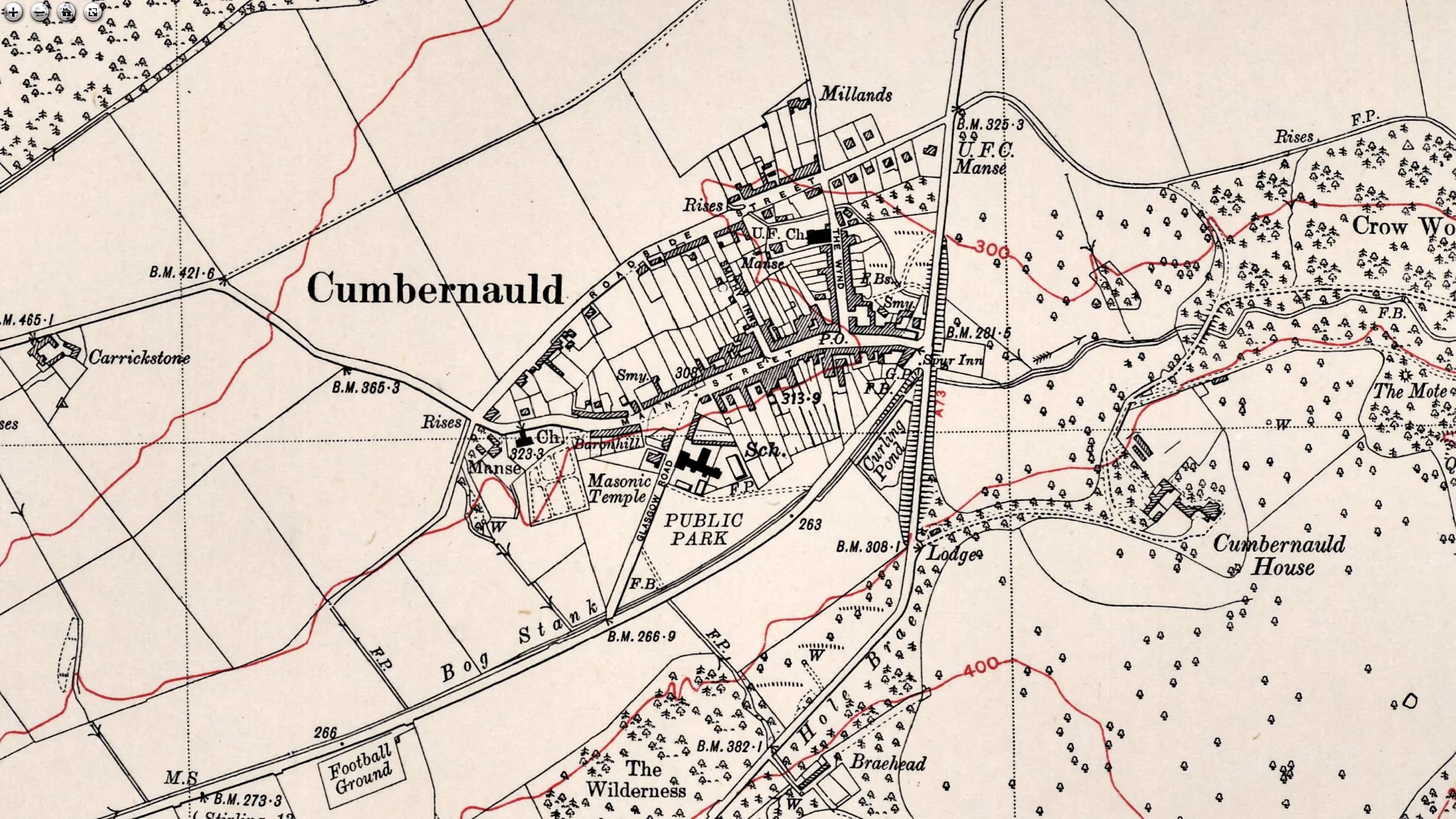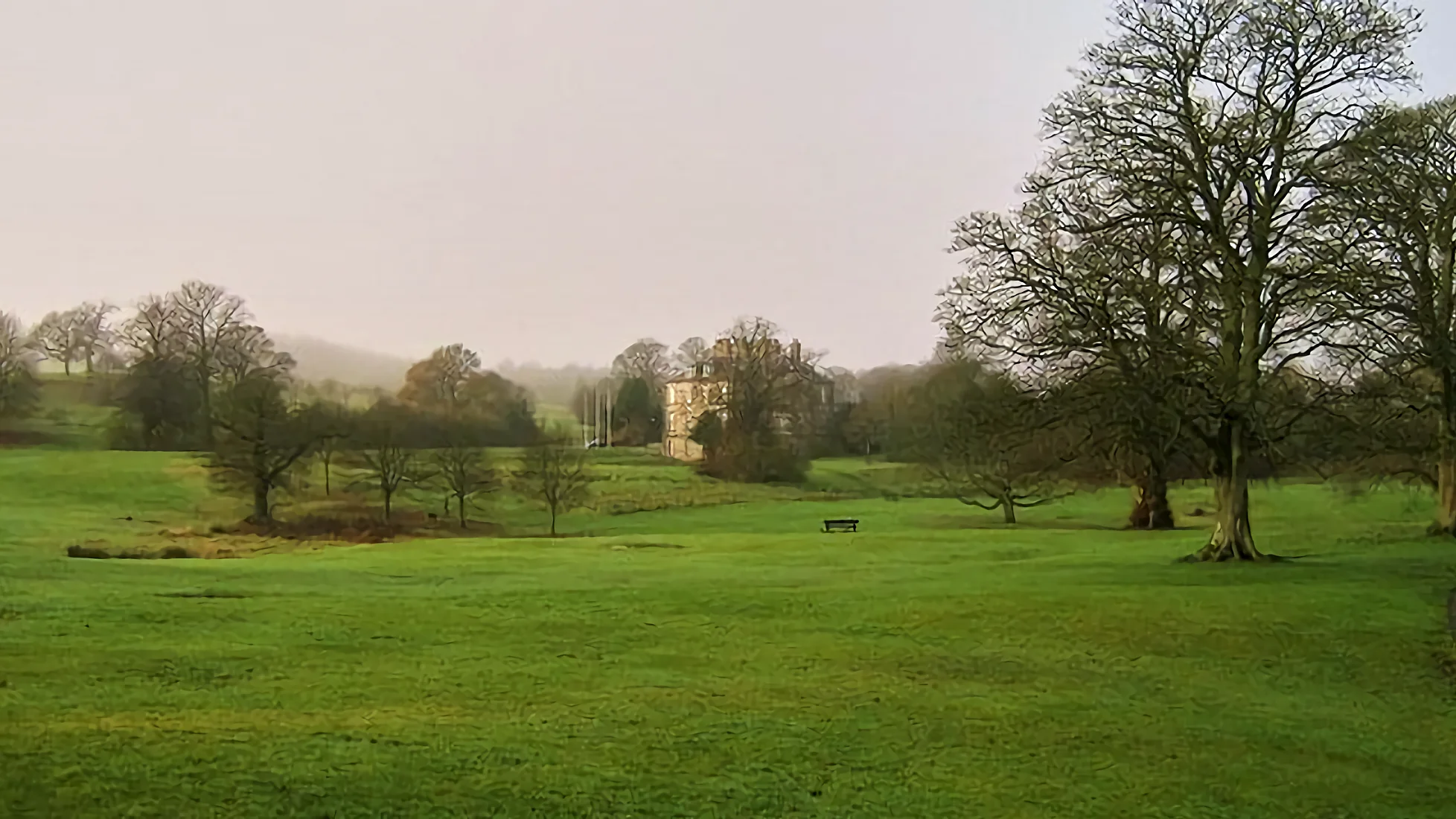
Cumbernauld lies in Dumbartonshire between Glasgow and Edinburgh. The name is supposedly from the Celtic cumar-an-alt meaning a meeting of the streams.
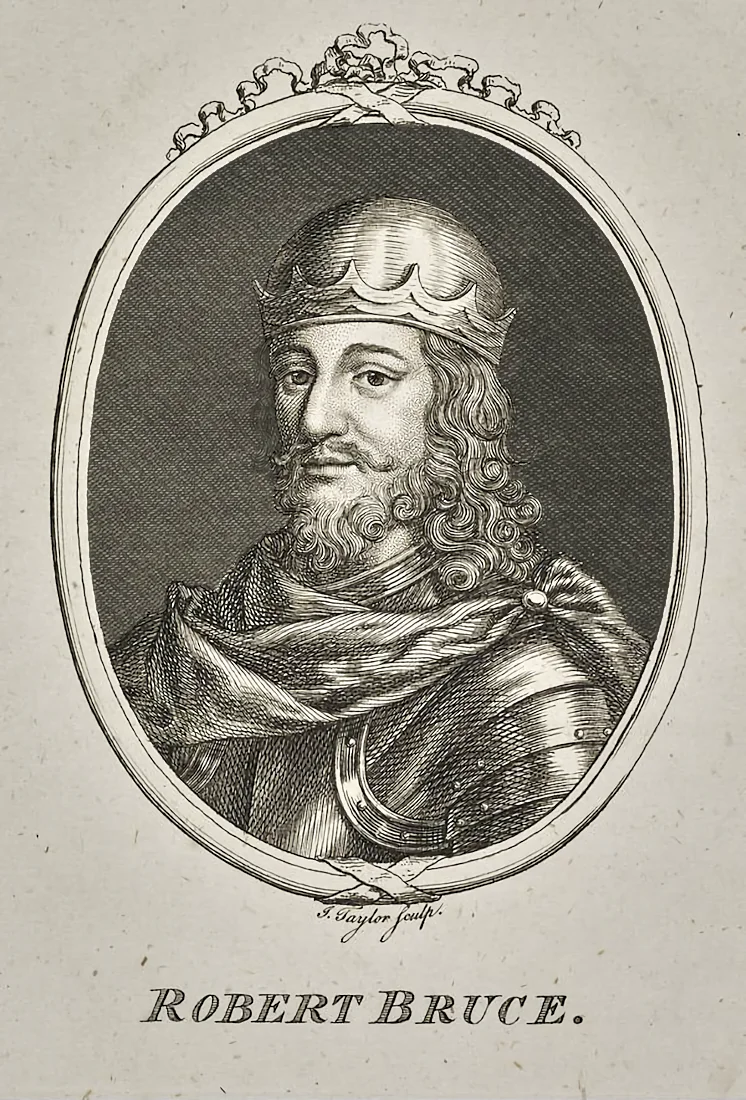
It is a place with a long history, central to the story of Scotland. The Antonine Wall, which was the northernmost extent of the Roman Empire, ran to the north of Cumbernauld as does the famous Forth-Clyde Canal built in the eighteenth century. On a standing-stone near Cumbernauld at Carrickstone, King Robert the Bruce is said to have placed his standard while gathering his forces on the eve of the famous Battle of Bannockburn in 1314.
The ancient castle of Cumbernauld and its lands passed from the Comyn family, Earls of Buchan, after their defeat at the hands of Robert the Bruce during the Wars of Independence. They were granted to Sir Robert Fleming who had been an associate of Bruce and was rewarded for his support. The Flemings made Cumbernauld Castle their principal seat of power. The family were loyal soldiers for the Crown during the Middle Ages. Malcolm Fleming fought at the Battle of Durham in 1346, and Sir David Fleming is said to have distinguished himself at the Battle of Otterburn in 1388.
The Flemings continued to hold the lands of Cumbernauld into the sixteenth century. Malcolm, Lord Fleming, was Lord Chamberlain of Scotland and died at the Battle of Pinkie Cleugh in 1547. John, Lord Fleming, was raised to the peerage as Earl of Wigtoun (also known as Wigtown or Wigton) in 1606 by King James I. His son John Fleming, 2nd Earl of Wigtoun, was a Privy Councillor, a Commissioner of the Estates, and a firm Royalist during the civil wars of the mid-seventeenth century in support of King Charles I. His son John, who later became 3rd Earl of Wigtoun, was also a Royalist and fought at the Battle of Philiphaugh in 1645. It is said that Cumbernauld Castle was destroyed at this time.
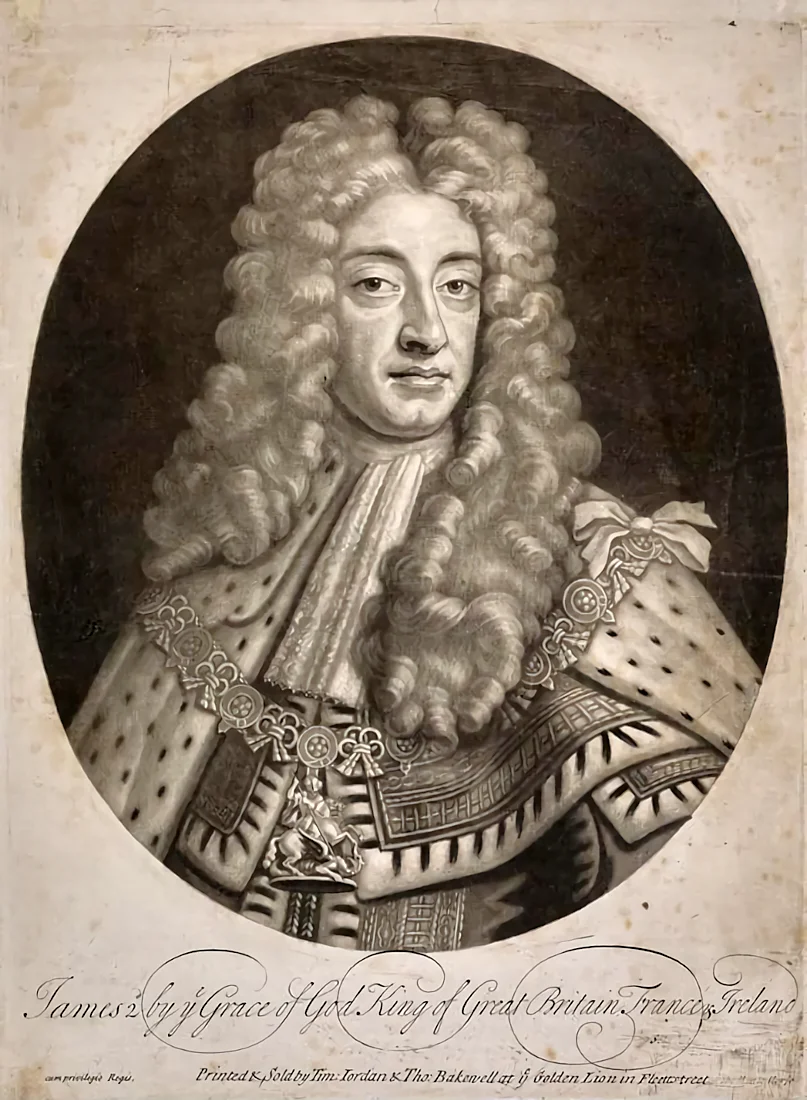
William Fleming, 5th Earl of Wigtoun, was educated at Glasgow University and had a military career before inheriting his brother’s lands and titles. He rose to be Commander of Dumbarton Castle, Sheriff of Dumbarton, and a Privy Councillor. John Fleming, 6th Earl of Wigtoun, continued his family’s ancestral support of the House of Stuart and accompanied King James VII when he fled to France in 1689. On Wigtoun’s return to Scotland, he was an opponent of the Treaty of Union. At the outbreak of the Jacobite Rising of 1715 he was imprisoned in Edinburgh Castle as a suspected Jacobite sympathiser.
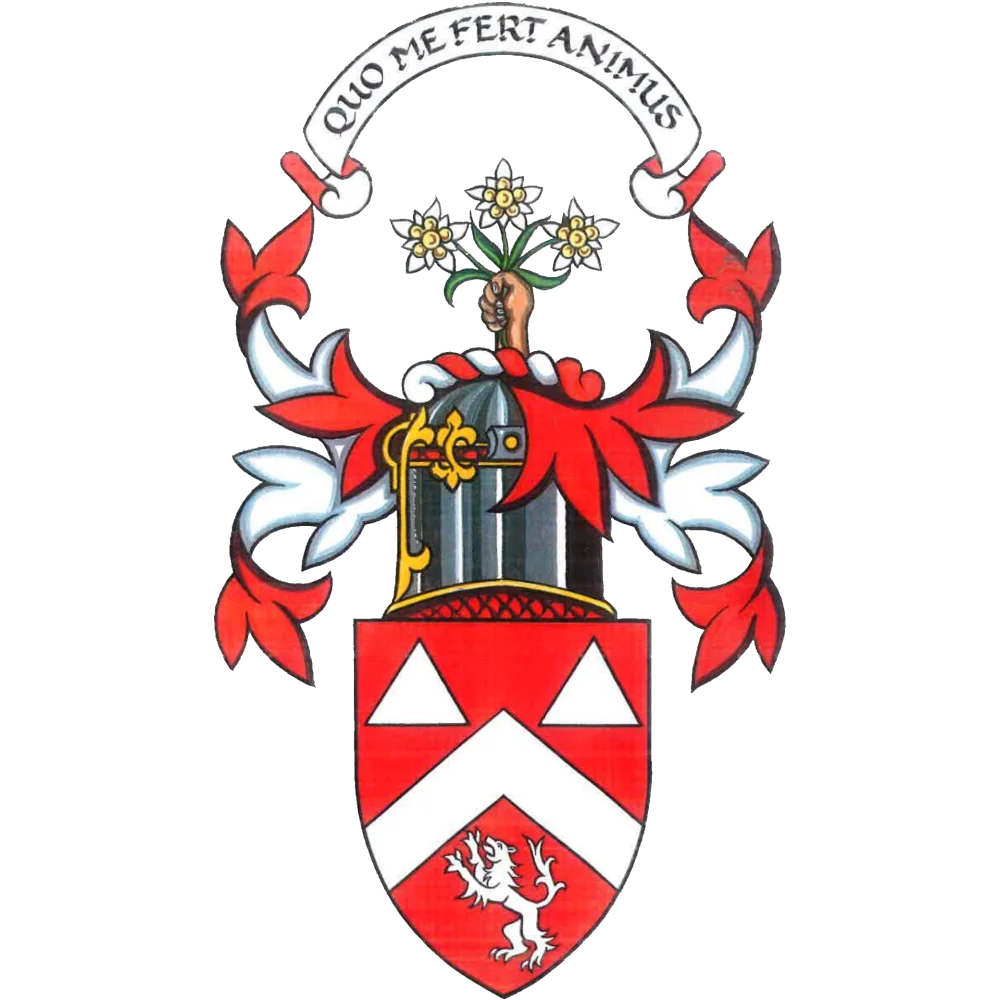
On the ending of the Wigtoun male line, the estates passed through Clementina, daughter of the 6th Earl who had married Charles, 10th Lord Elphinstone. The family continued to hold these estates down to the assignation of the feudal Earldom of Wigtoun and Barony of Cumbernauld to John William Burns of Kilmahew in 1876. Burns belonged to a family of wealthy shipping magnates, and he set about improving the estates. In 2023, the barony is held by Dr. Roland Zettel.