
Crawfurdmuir is a moorland area in the Lowther Hills of southern Lanarkshire, the highest part of Lowland Scotland. Its name comes from the Crawfurd or Crawford family who once held the lands.
They in turn took their name from the village of Crawford which lies to the east of the muir. The name Crau-ford itself means the passage or road of blood which may have arisen from a battle fought long ago, perhaps between the native people and Roman invaders. A Roman Road passes nearby to Crawford.
From at least 1100, Crawford Castle was the home of the Crawford family, who were likely of Norse origin and adopted the place as a surname in the Norman style. When King David I came to the throne in 1124, he granted the area to Baldwin de Biggar, a Fleming who was one of many warriors invited by the king to hold land from him in return for military service. It is believed Baldwin married an heiress of the Crawford family.
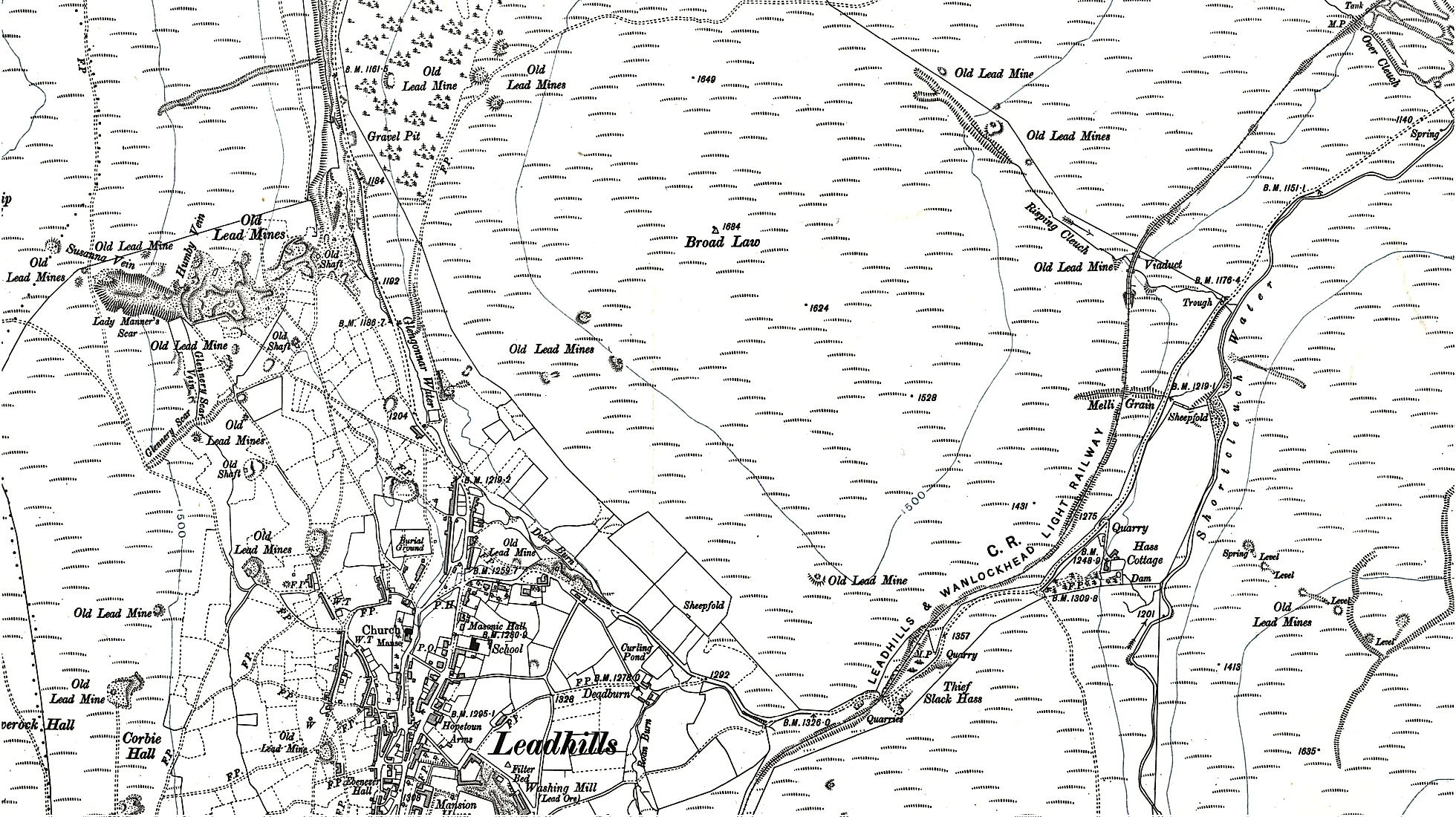
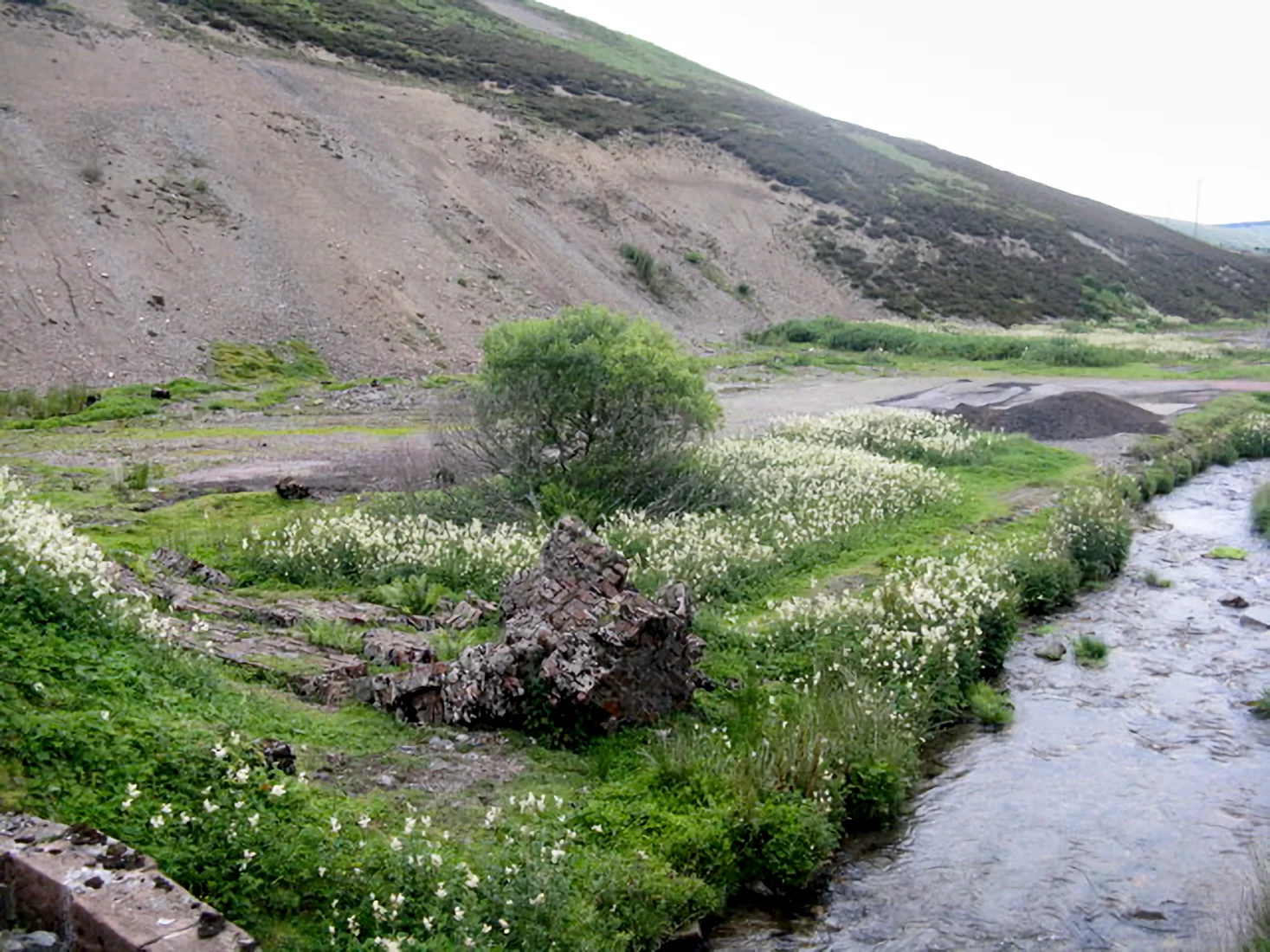
During the Middle Ages, lands in Crawford Muir were granted to the monks of Newbattle Abbey. From this point on the area also became known as Friersmuir or Friar’s Muir. We know there was lead mining in the fifteenth century, and around 1500 gold was discovered on the lands, after which profitable gold mining operations were set up. In 1587 the lands and barony of Crawfurdmuir were conferred on Mark Kerr, Lord Newbattle, former commendator of the Abbey. Kerr was raised to be the Earl of Lothian and was succeeded by his son Robert, 2nd Earl of Lothian. By the middle of the seventeenth century, the lands and barony, known variously as Crawford Muir and Friar’s Muir, had passed to John Hope of Hopetoun.
The family mines in the area, especially around the settlement of Leadhills, came to be incredibly productive. Hopetoun died in the sinking of HMS Gloucester in 1682 while traveling with the Duke of York. Family tradition is that he gave his seat in a rescue boat to the Duke and that it was in recognition of this act that his son Charles was created Earl of Hopetoun by Queen Anne on 15 April 1703, shortly after reaching his majority.
The Earls of Hopetoun were prominent nobles, occupying important positions in politics, the army, and colonial service during the nineteenth and twentieth centuries. James, 3rd Earl of Hopetoun, sat in the House of Lords as a Scottish Representative Peer and was for many years Lord-Lieutenant of Linlithgowshire, a post also held by successive Earls of Hopetoun. John Hope, 7th Earl of Hopetoun, was a prominent politician, the first Governor-General of Australia and Secretary of State for Scotland, and in 1902 was created Marquess of Linlithgow. His son, Victor, 2nd Marquess of Linlithgow, served as Viceroy of India from 1936 to 1943.