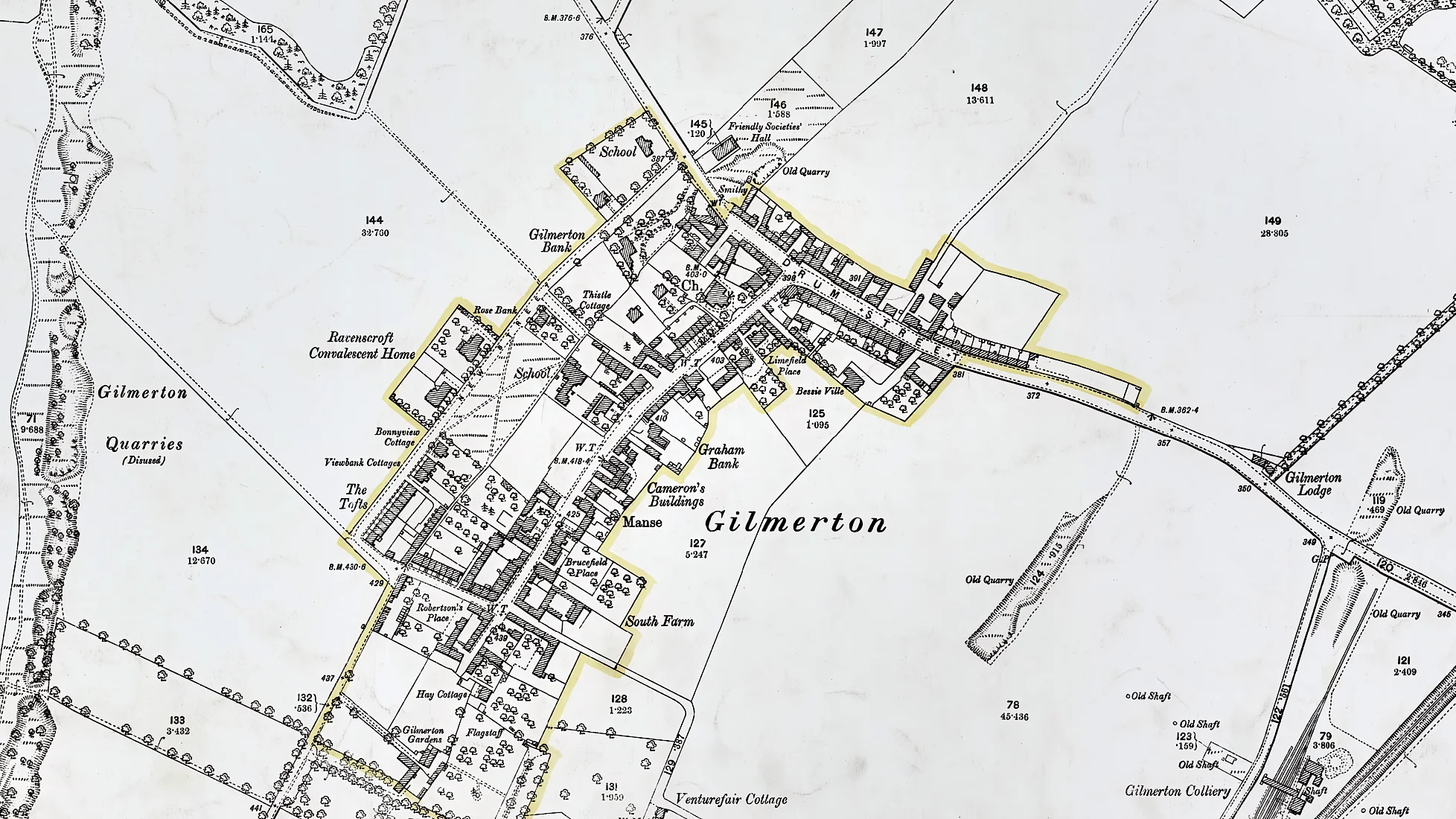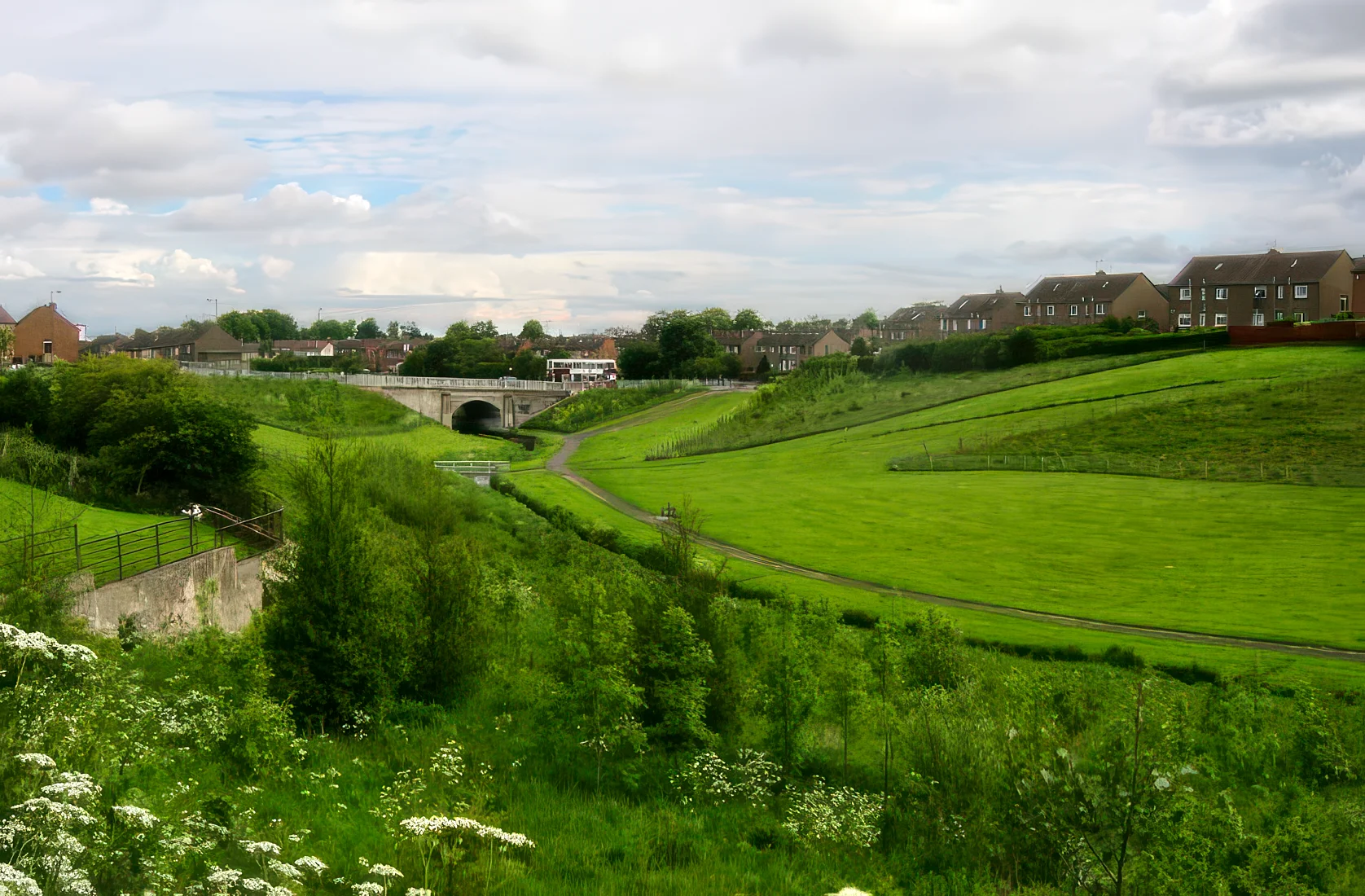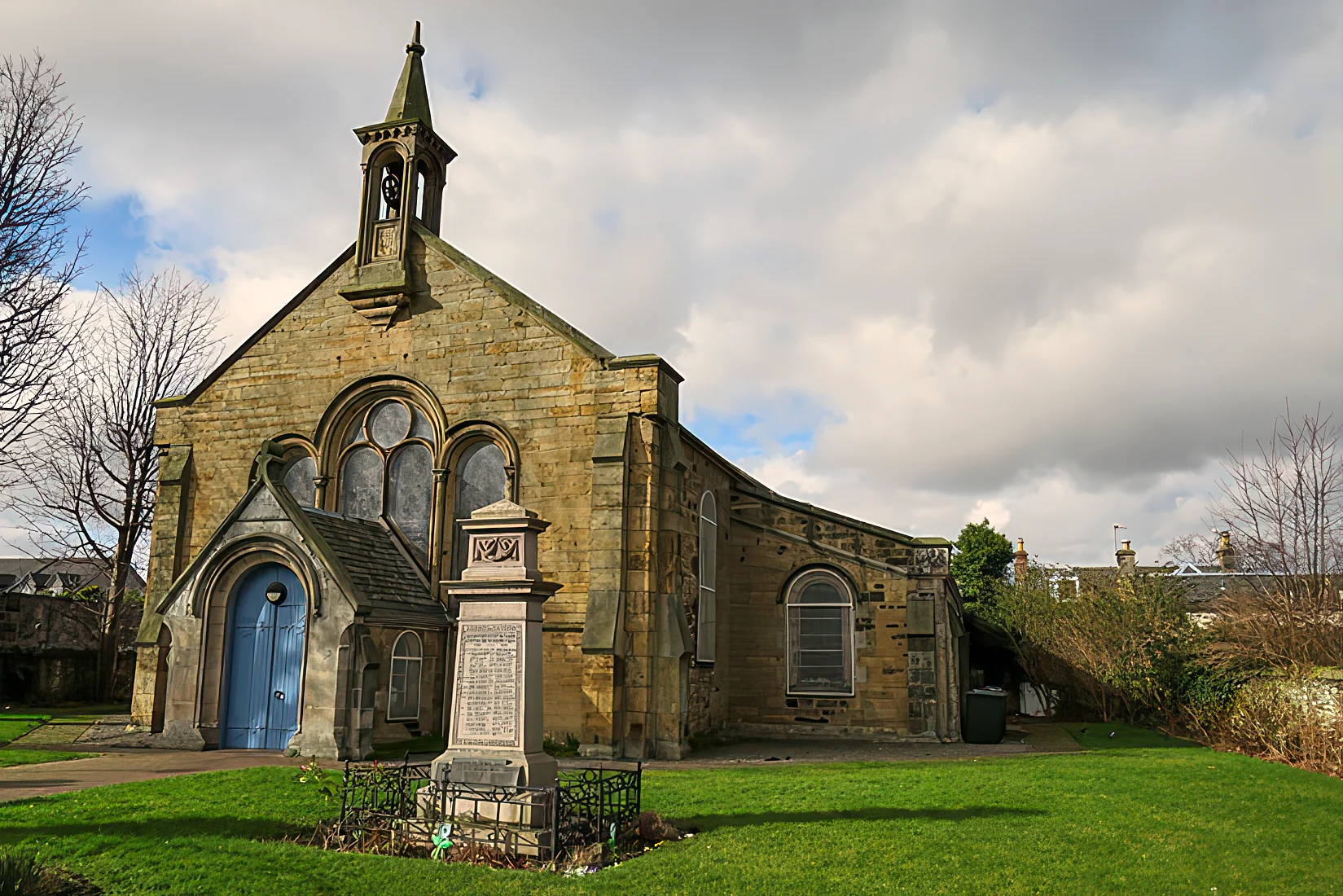

Gilmerton was a once a small village to the southeast of Edinburgh and is now part of the city. The name derives from the Gaelic Gille-Moire meaning ‘servant of the Virgin Mary’ and the Old English ‘ton’ for settlement. From at least the fifteenth century coal and limestone were mined here.
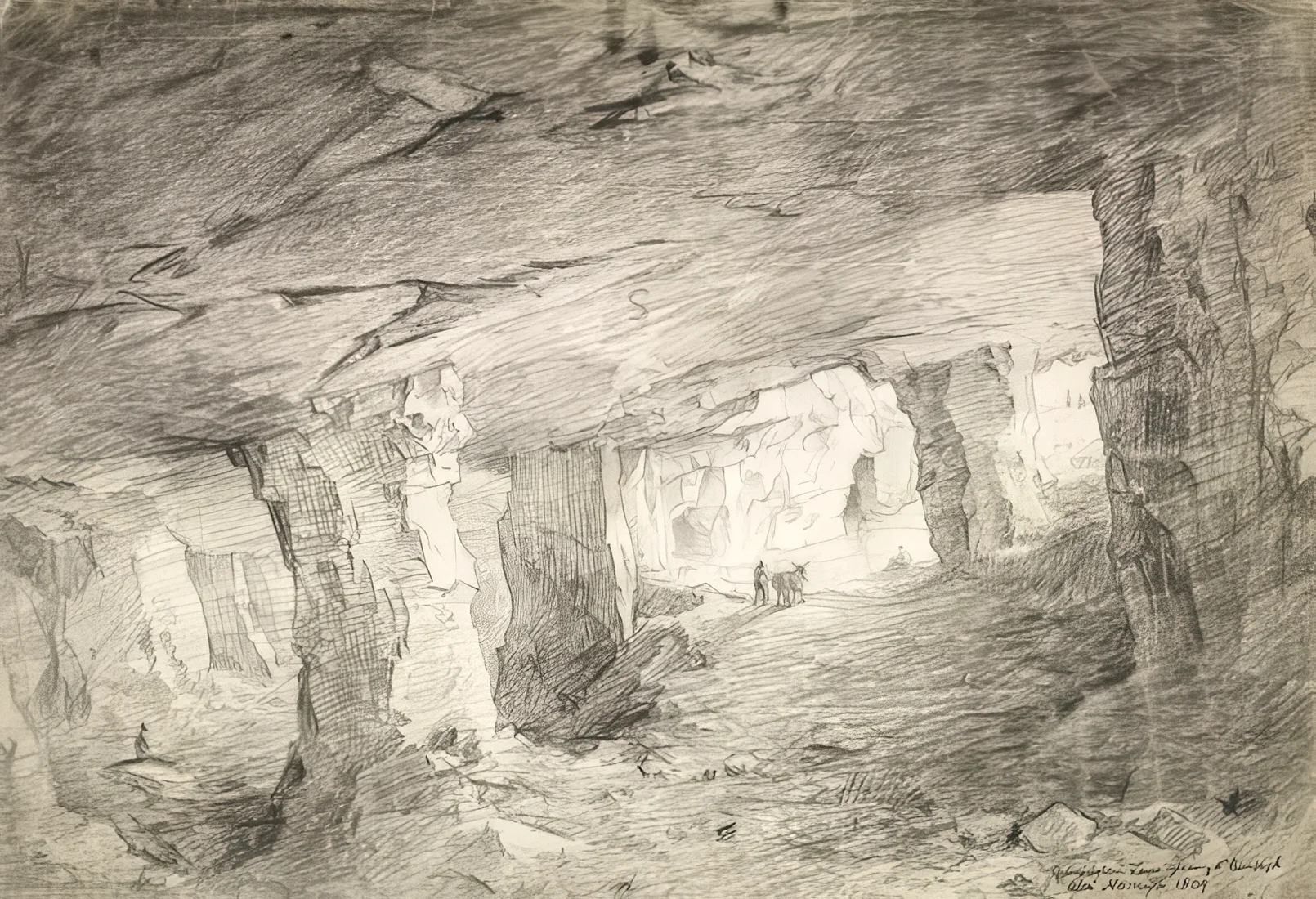
Dating to the eighteenth century or before is Gilmerton Cove, a complex of rooms hewn underneath the rock. Many theories abound to its origins. The Barony of Gilmerton is mentioned in The Grey Brother, a ballad recorded by Sir Walter Scott. The earliest record of Gilmerton is from the late twelfth century when Ranulf de Soulis granted land to Newbattle Abbey. The De Soulis family, who were Hereditary Butlers of Scotland, held the land until the Wars of Independence, when they were punished for supporting their Comyn cousins.
In February 1302, an English army camped at Gilmerton before the Battle of Rosslyn, where they were routed by the Scots. The lands of Gilmerton were from this point held by the Crown with a succession of tenants including from the prominent Herring, Ramsay and Somerville families. In 1661, eight people from Gilmerton were put on trial during the Great Scottish Witch Hunt.
In the 1660s, John Baird, Lord Newbyth and a Lord of Session, purchased the lands of Gilmerton from David Creighton of Lugton and also acquired the neighbouring lands at Newbattle and Todhills. On 9 August 1667, he was awarded a charter from the King that erected and granted him the Barony of Gilmerton. Lord Newbyth married Margaret, daughter of the Earl of Tweeddale. Their son, Sir William Baird, became a member of the Scottish Parliament. In 1680, King Charles II created him a baronet. Baird married Margaret, daughter of Sir John Gilmour of Craigmillar, Lord President of the Court of Session, and they had two sons.
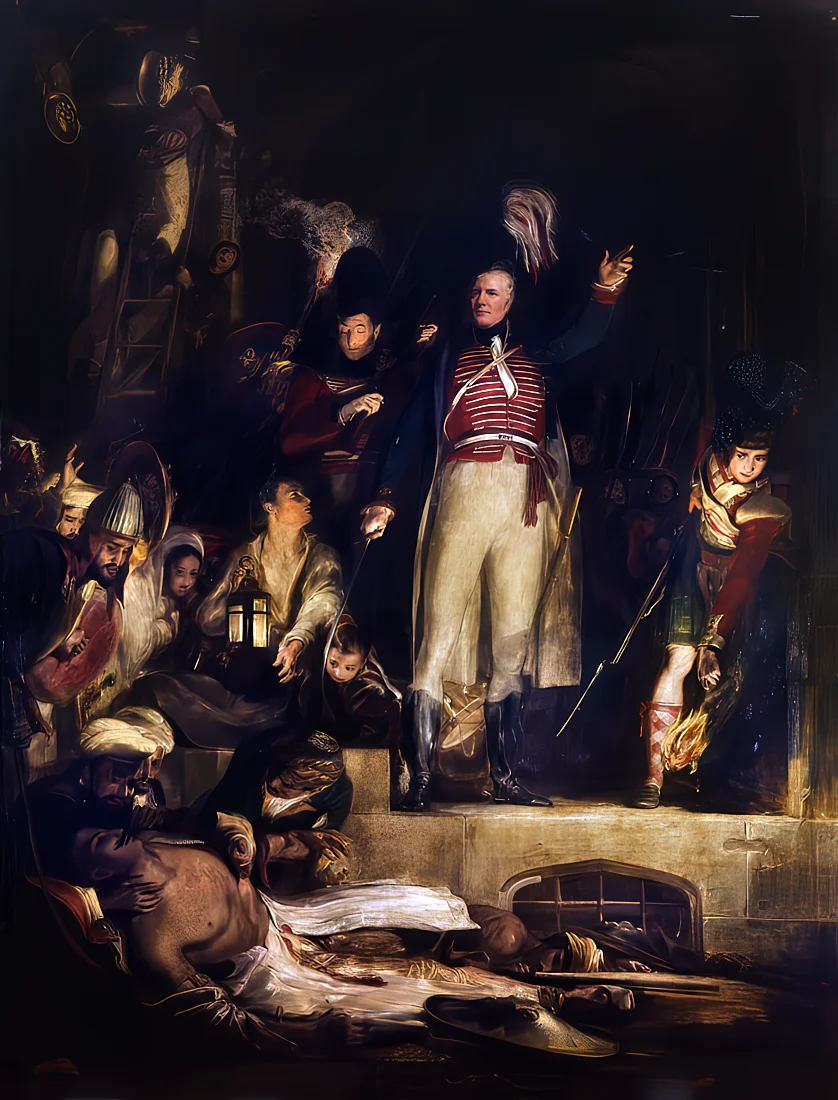
The eldest son, Sir John, succeeded to his father’s lands and titles but died childless in 1745. His younger brother, Alexander, also predeceased him childless. The lands and titles then passed to a cousin, William Baird, who was Lord Provost of Edinburgh. William was succeeded by his second son, Robert Baird, in 1769, who became an MP. Two of Robert’s brothers joined the army and rose to prominence – Major-General Joseph Baird and General Sir David Baird, the hero of Seringapatam. Upon his death in 1828, General Sir David Baird’s baronetcy passed to his nephew David, who had already inherited his father’s Newbyth estates.
In 1817, the Barony of Gilmerton was valued at £1000. The Baird family held the Gilmerton and Newbyth estates over subsequent generations, with some men distinguished in the military and golf. The Barony of Gilmerton passed through the family until 1930, when it became dormant. In 2020, Alvise Figà Talamanca, became the 8th Baron of Gilmerton.