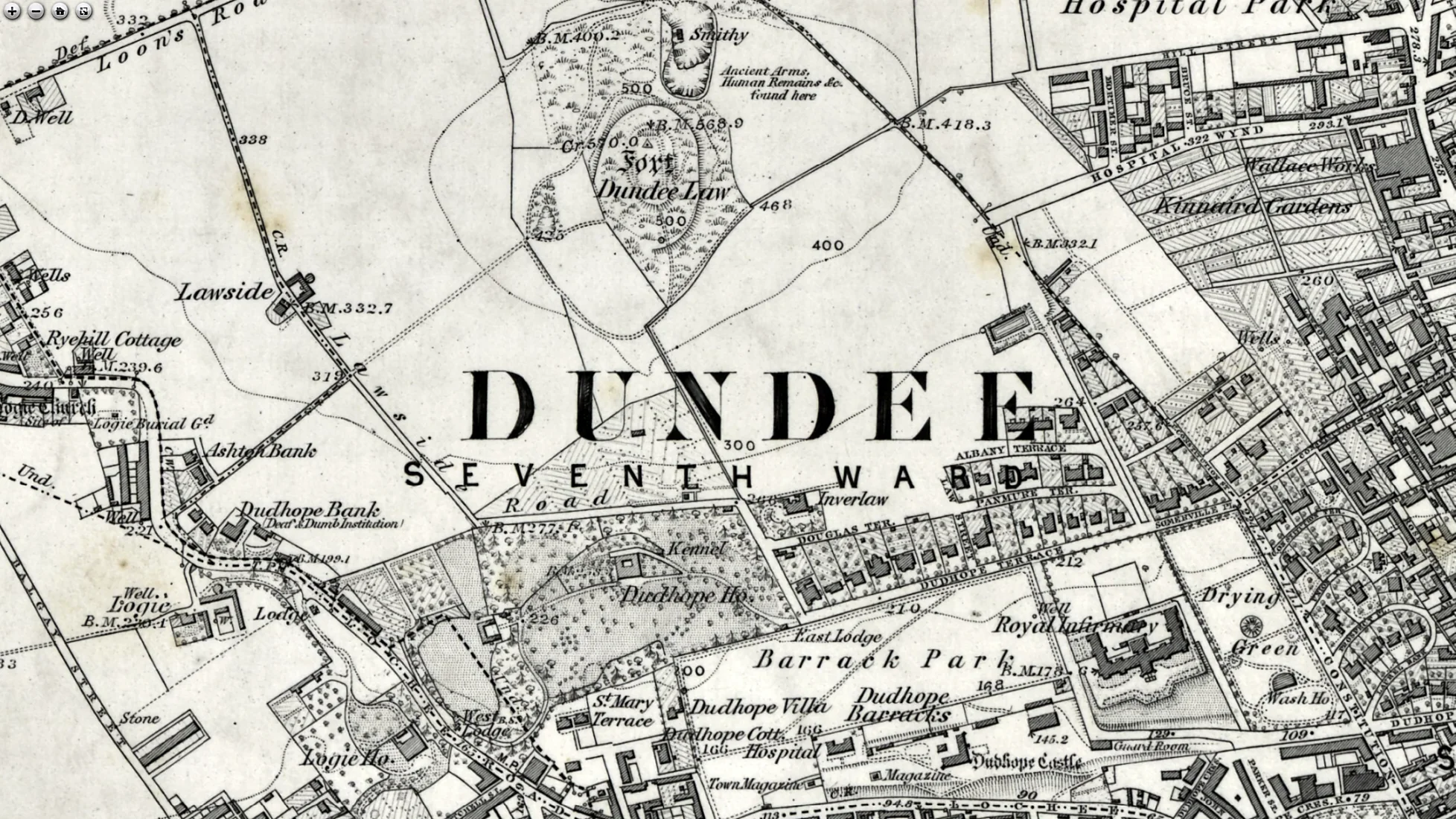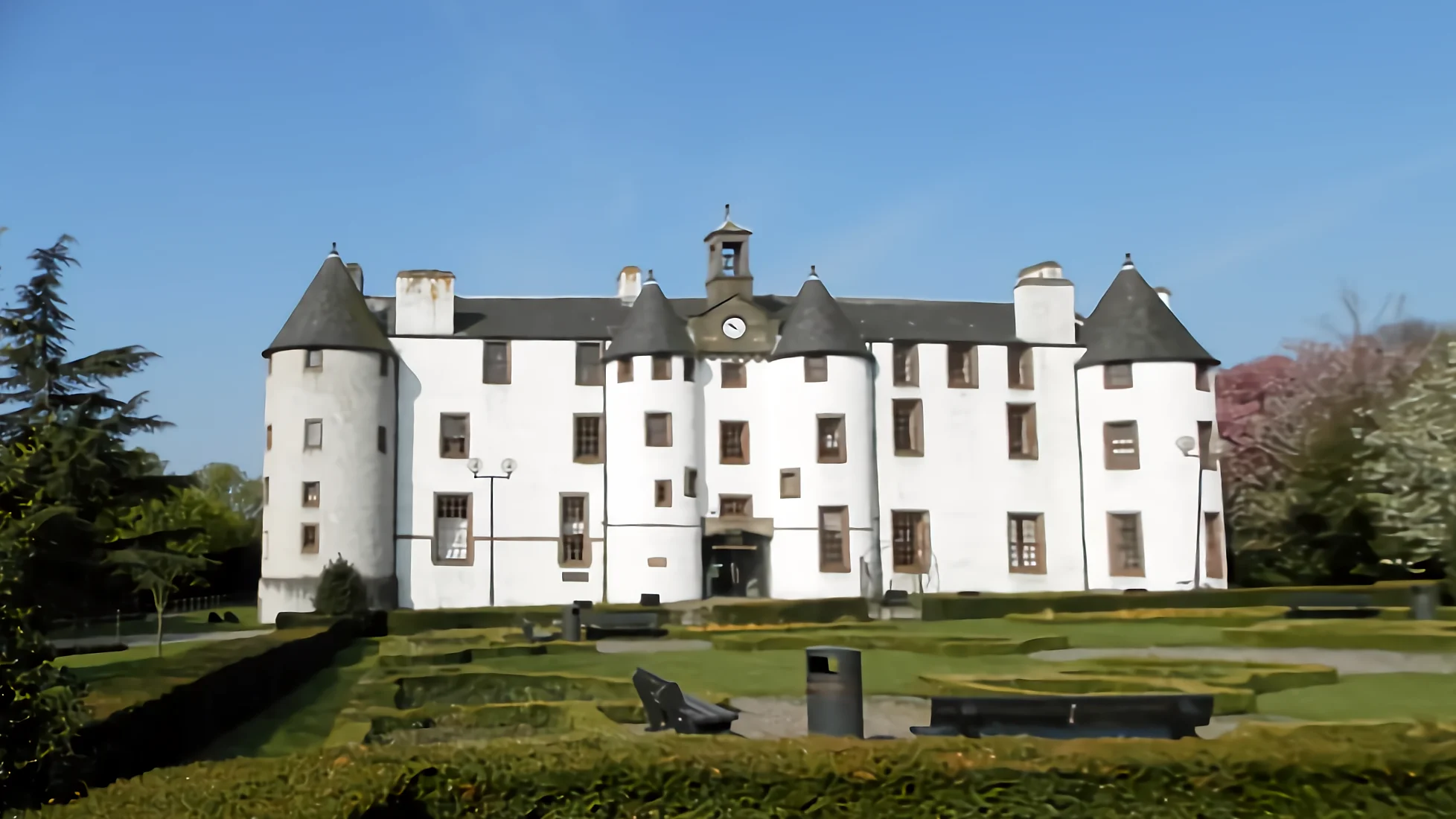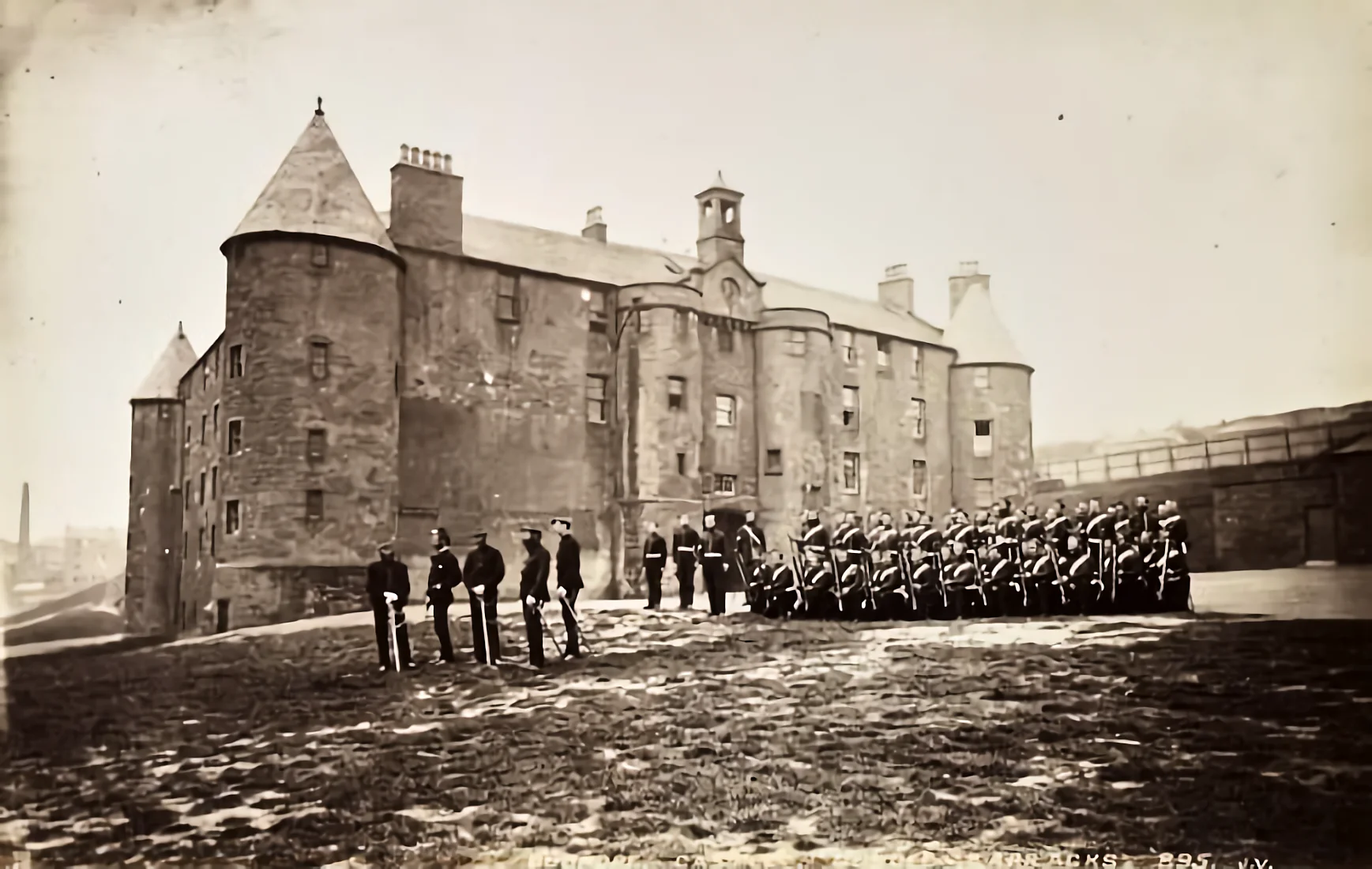
Dudhope is today an area of Dundee, one of the great cities of Scotland which lies on the north bank of the River Tay. The original castle of Dudhope was built in the late thirteenth century. It was around this time that Alexander Scrymgeour, a companion of William Wallace, was appointed by him to be Constable of Dundee. This position became hereditary, bestowing power and influence on his descendants. The Scrymgeours also became hereditary standard-bearers of Scotland. Toward the end of the fifteenth century, the family acquired the lands of Dudhope, which they held for the next two centuries.
Sir James Scrymgeour, Baron of Dudhope, was a diplomat sent to Denmark to negotiate the marriage of King James VI to Princess Anne, and on the death of Queen Elizabeth of England, to negotiate with the English. John Scrymgeour was a supporter of King Charles I, who made him Viscount Dudhope. His son James, 2nd Viscount Dudhope sided with the Covenanters during the Wars of the Three Kingdoms and faced the Royalist army at the Battle of Marston Moor in 1644, where he was mortally wounded. John, 3rd Viscount Dudhope, also fought in the wars and was part of the Scots army that marched into England in support of King Charles II, only to be defeated at the Battle of Worcester in 1651. At the Restoration of the monarchy, he was rewarded for his loyalty when he was made Earl of Dundee.
Following Dundee’s death in 1668, his castles, lands, and offices reverted to the Crown. Dudhope was for a time held by Charles Maitland, later the Duke of Lauderdale. When Lauderdale fell from favour, some of his estates were transferred to John Grahame of Claverhouse, including the house at Dudhope.
Graham was later made Viscount Dundee and known as ‘Bonnie Dundee’. He was loyal to the House of Stuart, and during the Jacobite Rising of ‘89 raised the Royal Standard on Dundee Law in support King James. Dundee gathered an army which defeated government troops at the Battle of Killiecrankie; however he was killed in his moment of victory.
Following the defeat of the Jacobites, the Grahame estates were forfeit. King William granted the Barony of Dudhope and the heritable office of Constable of Dundee to Archibald Douglas, 3rd Marquess and later Duke of Douglas. On his death, there were rival claimants to the lands and titles, which led to a major legal case, known as the Douglas Cause, which was finally settled in 1779, recognising the Duke’s nephew Archibald as his heir. Archibald served as an MP and in 1790 was created Baron Douglas of Douglas which enabled him to sit in the House of Lords. Following the failure of the male line the lands and titles passed to Cospatrick Alexander Home, 11th Earl of Home, who had married Lucy Elizabeth, granddaughter of Archibald Douglas, 1st Baron Douglas of Douglas. The Earls of Home were prominent nobles holding important political positions during the nineteenth and twentieth centuries.