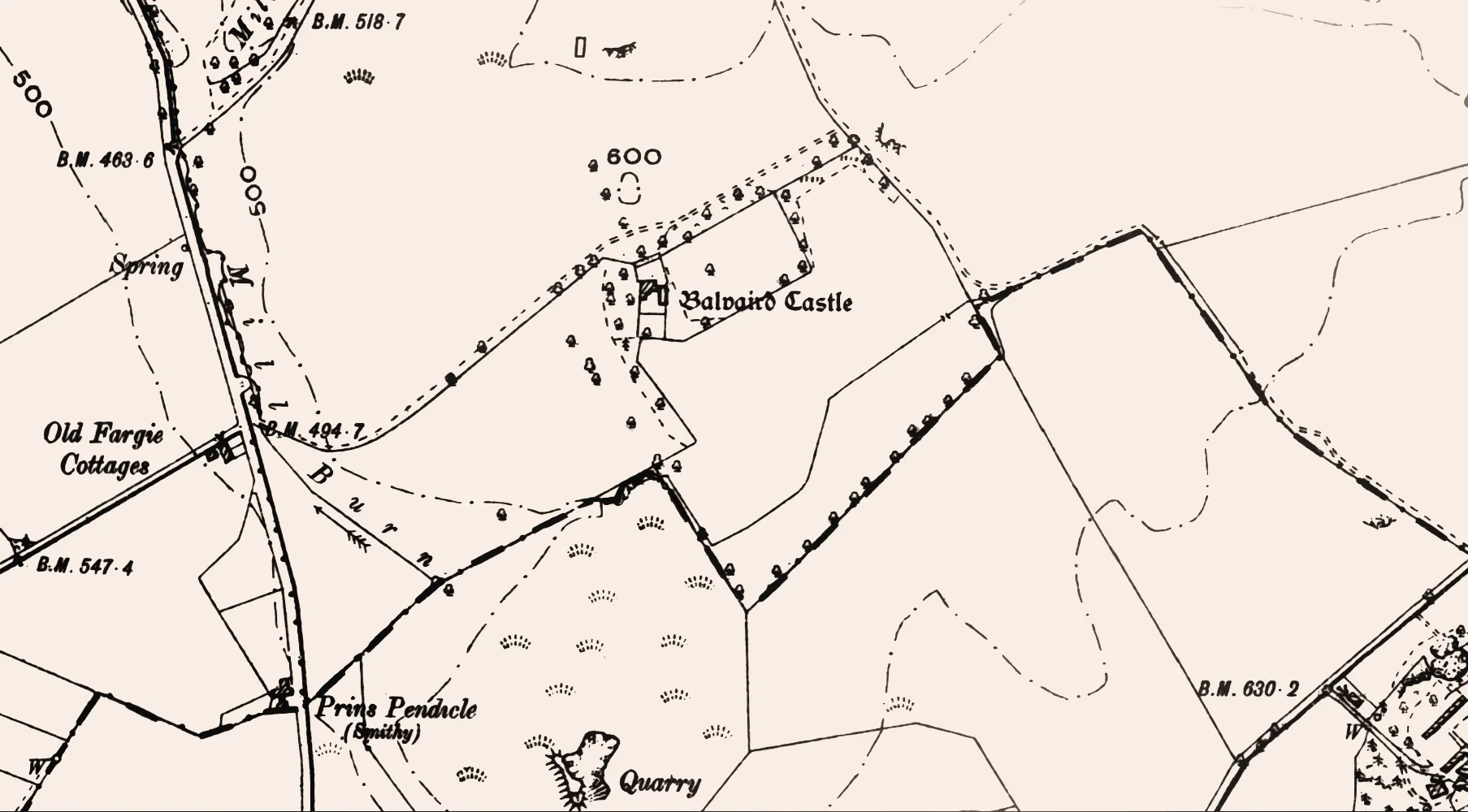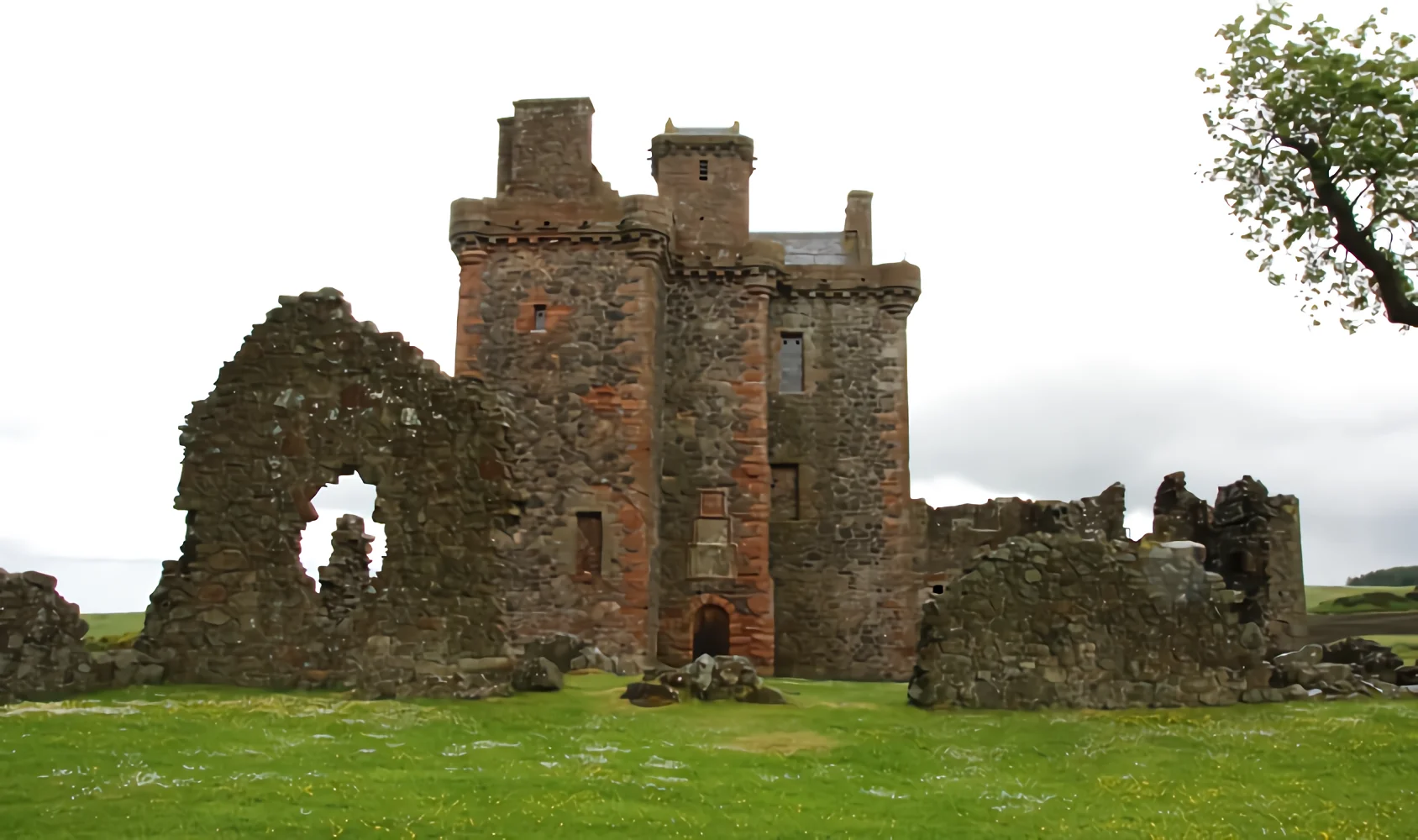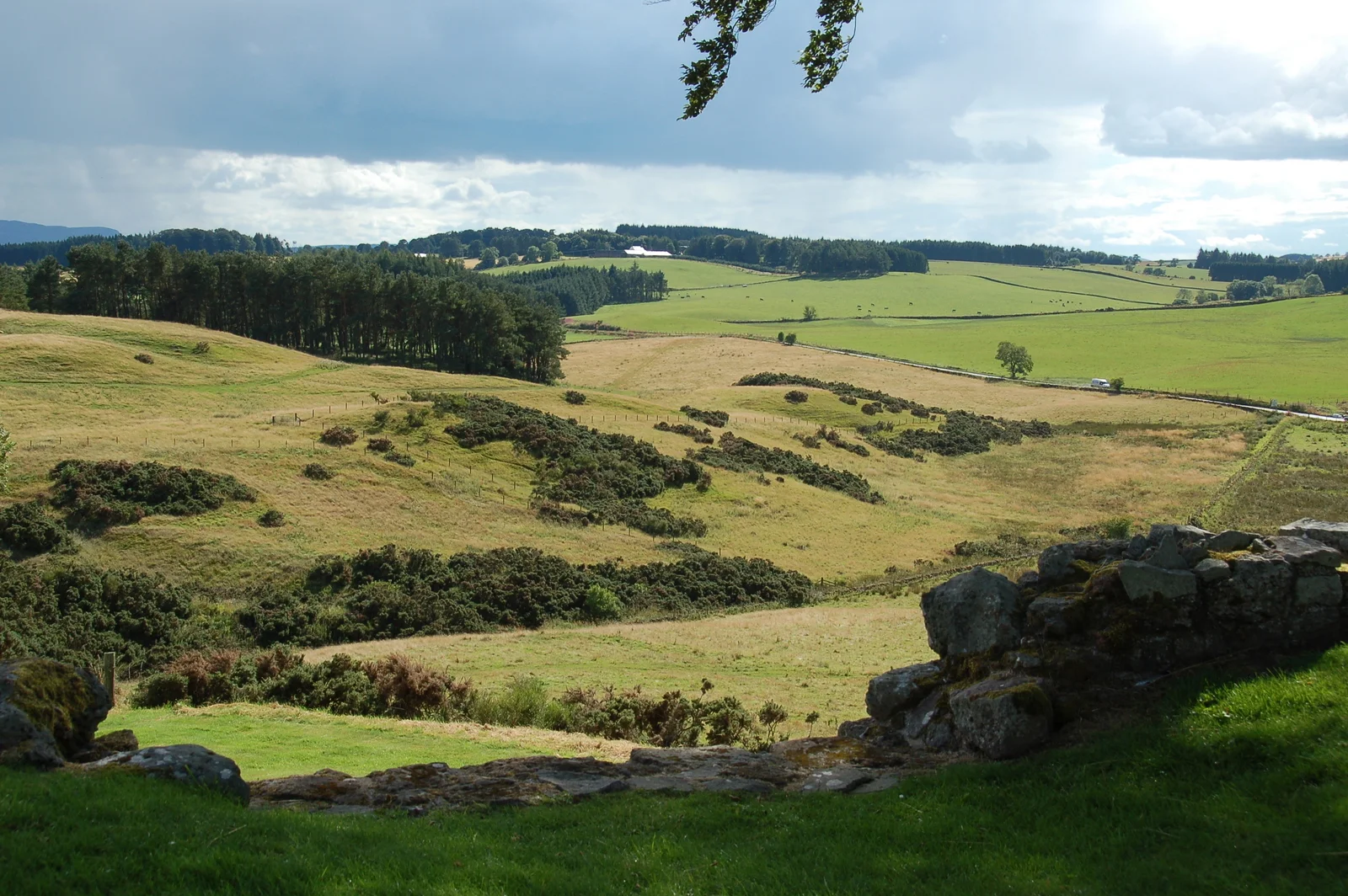
Balvaird Castle stands three miles from Glenfarg, Perthshire. The area has been in occupation since the Neolithic period as demonstrated by the famous ‘Rocking Stone of Balvaird’, a mass of detached rock poised on a narrow base. It once rocked under very slight pressure but this motion was destroyed around 1650 by those who feared its supposed supernatural powers, as with many similar stones across Britain.
The name ‘Balvaird’ is from the Celtic Bail’ an bhaird, meaning ‘The home of the Bard’. Bards were important in Gaelic society and were granted land by lords in return for their services. Balvaird is said to have been given by the king himself to a family of hereditary court bards. In 1295 Balvaird first appears in the historical record as being held by the De Freslay family as part of the dominium of Fourgy, also known as Arngask. Around 1332 a De Freslay heiress married Sir Richard Barclay of Kippo taking with her the lands of Arngask, including Balvaird. Several Barclay men were members of the household of Robert, Duke of Albany, son of King Robert II and leading noble.
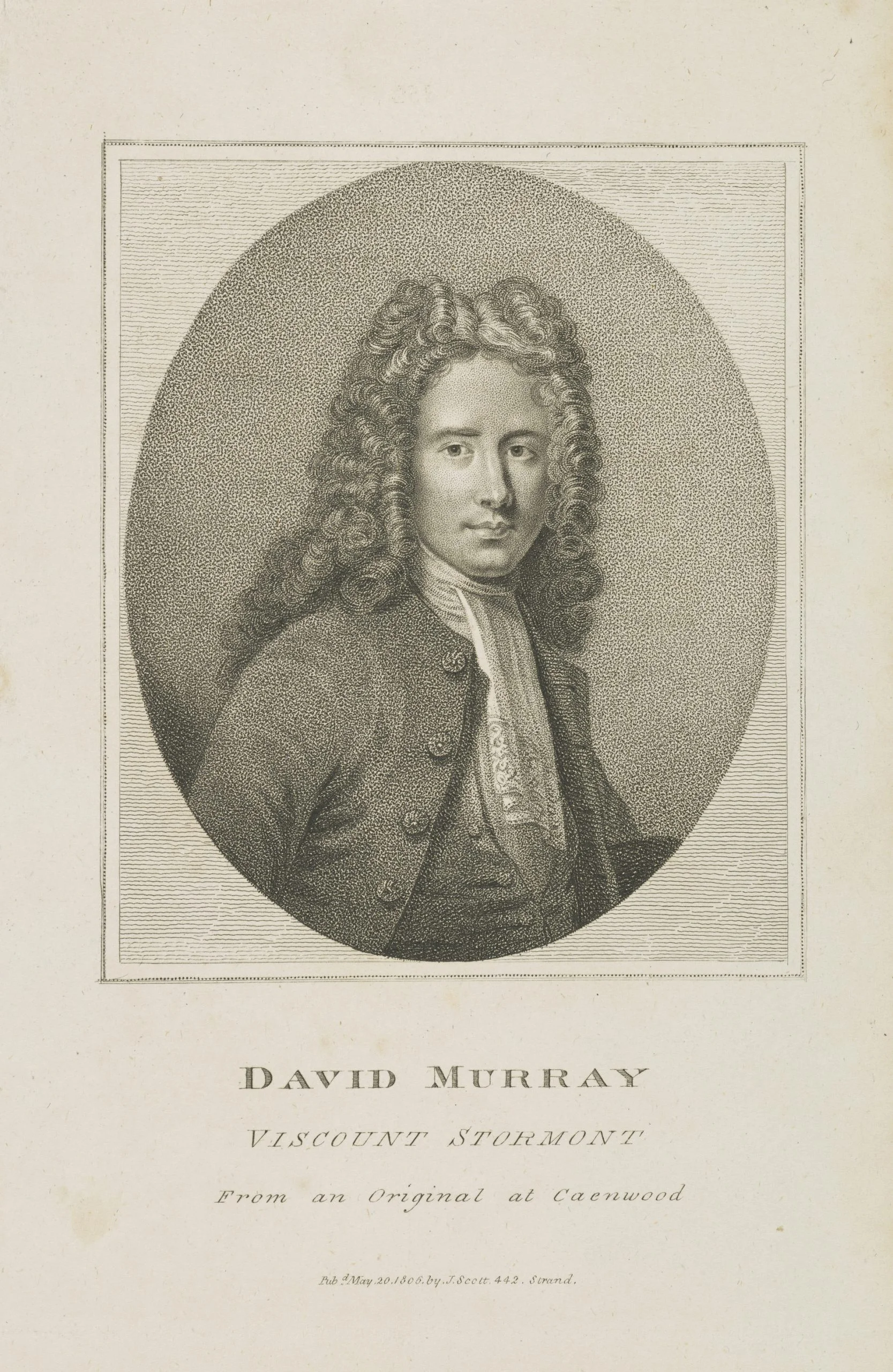
At the end of the fifteenth century Margaret Barclay, an heiress of Arngask married Sir Andrew, the second son of Sir William Murray of Tullibardine. This couple are believed to have built a tower house at Balvaird. The family were early supporters of the Reformation and served the Crown loyally. Sir Andrew Murray was granted the Barony of Balvaird in 1624 and was succeeded by his uncle Sir David Murray of Gospitrie, Viscount Stormont and Lord Scone. Stormont had risen to be Captain of the Guard for King James VI, and during the mysterious Gowrie Conspiracy supposedly played a prominent role in saving the king’s life, for which he was granted Scone Palace, land and titles. He was succeeded by his cousin the Reverend Sir Andrew Murray.
Sir Andrew was a commissioner to the General Assembly of the Kirk at Glasgow in 1638 where he is said to have strongly defended the king, and for this was made Lord Balvaird. His son, David, 2nd Lord Balvaird was also a firm adherent to the monarchy. In 1658 he succeeded his cousin as Viscount Stormont, and moved the main family seat from Balvaird to Scone Palace. He was succeeded by his son David, 5th Viscount Stormont, who with his Jacobite sympathies, almost ruined the family.
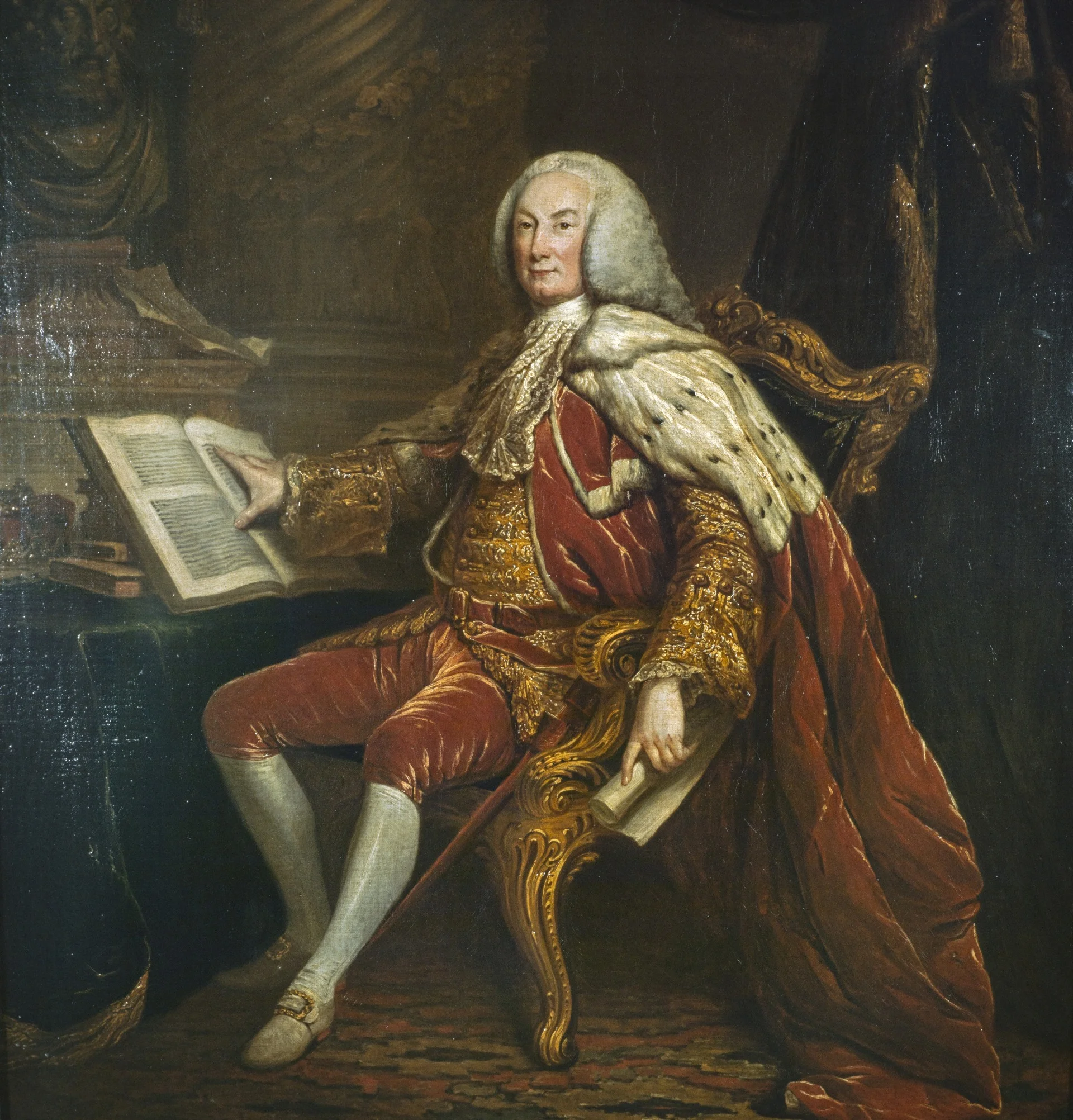
His second son, James, went into exile serving the Stuarts, and at times ran their government-in-exile. Stormont’s eldest son inherited the lands and titles, leading a quiet life, while a younger son, William, was a judge who has been called the greatest lawyer of the eighteenth century. William was also a politician and was ennobled as the Earl of Mansfield. He assisted the rise of his nephew, the 7th Viscount Stormont, through the British diplomatic service and into politics.
Mansfield initially named his nephew’s wife as his successor, as it was uncertain whether a Scottish lord could inherit an English title, and if a British peerage would prevent a Scottish peer from sitting in Parliament. By the end of his life, however, this issue had been cleared up, and in 1792 a second earldom was created and passed directly to his nephew, whose descendants were prominent politicians into the twentieth century. The two earldoms were ultimately reunited under one holder. The Murrays retained the barony until 2017, and the Baron before the present holder was Alexander Murray, 9th Earl of Mansfield, 8th Earl of Mansfield.
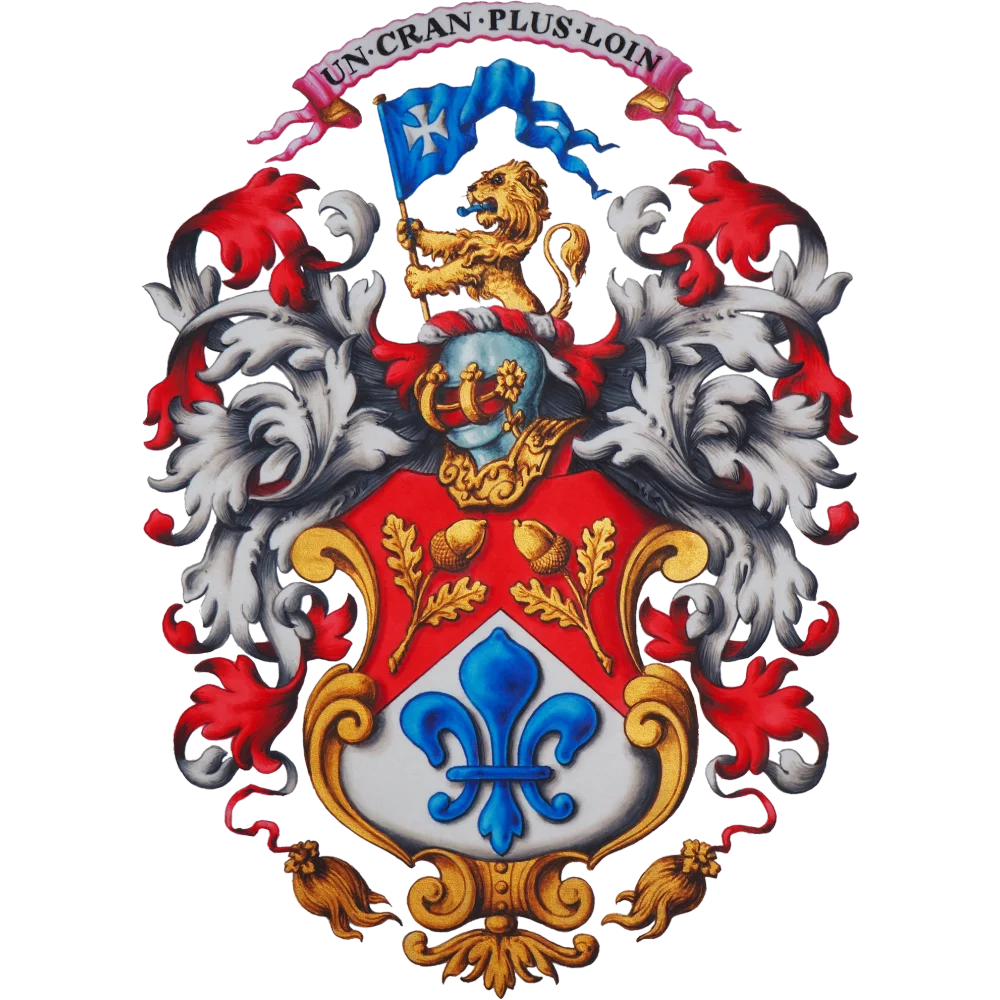
Brady Brim-DeForest of Balvaird Castle, Baron of Balvaird, matriculated Arms with the Lord Lyon King of Arms on 14 January 2020. He was also acknowledged at that time in the name and territorial designation “Brim-DeForest of Balvaird Castle”. The baron splits his time between Oak Hall, his estate in Northport, Maine, and his family pile in Perthshire, Scotland.