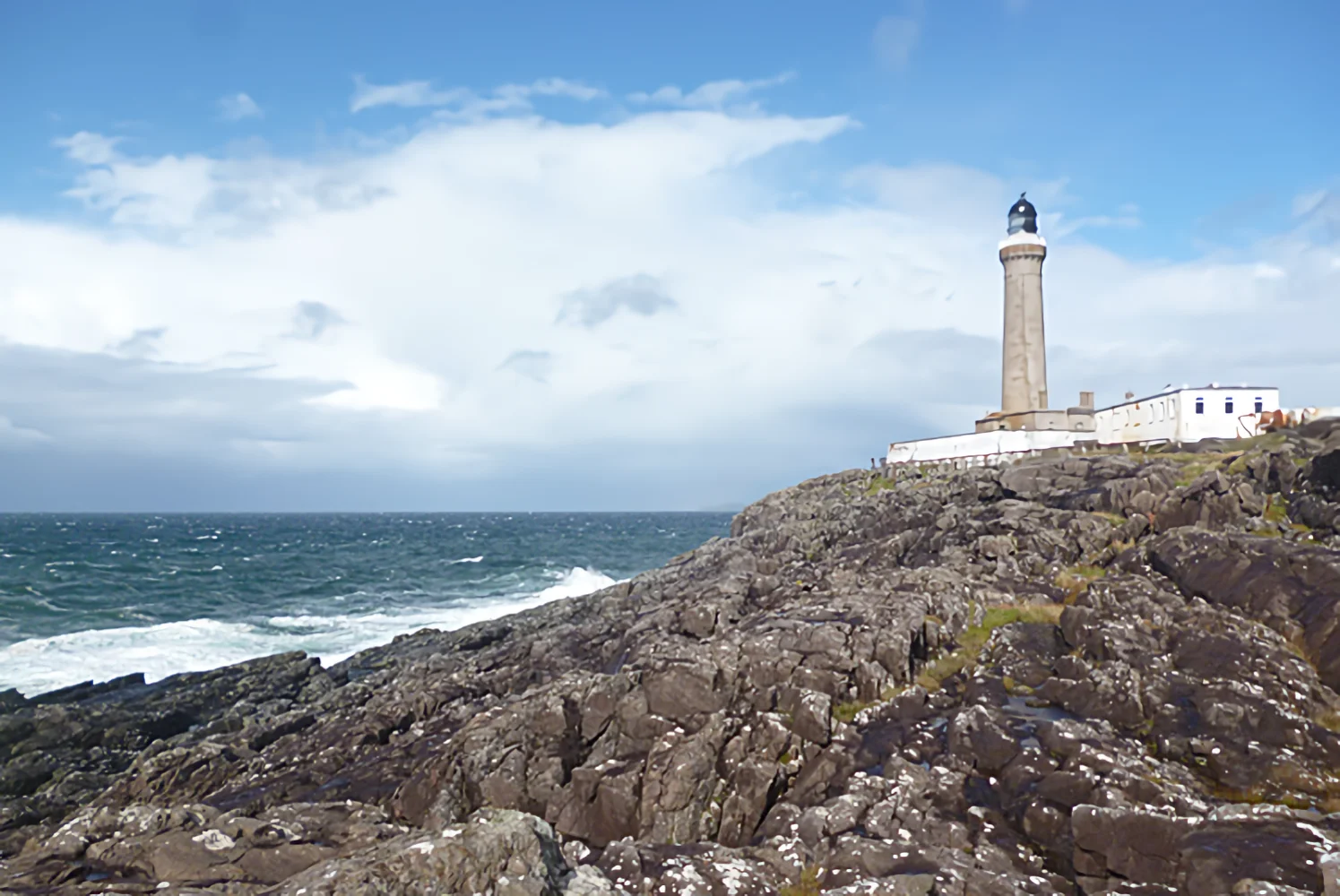

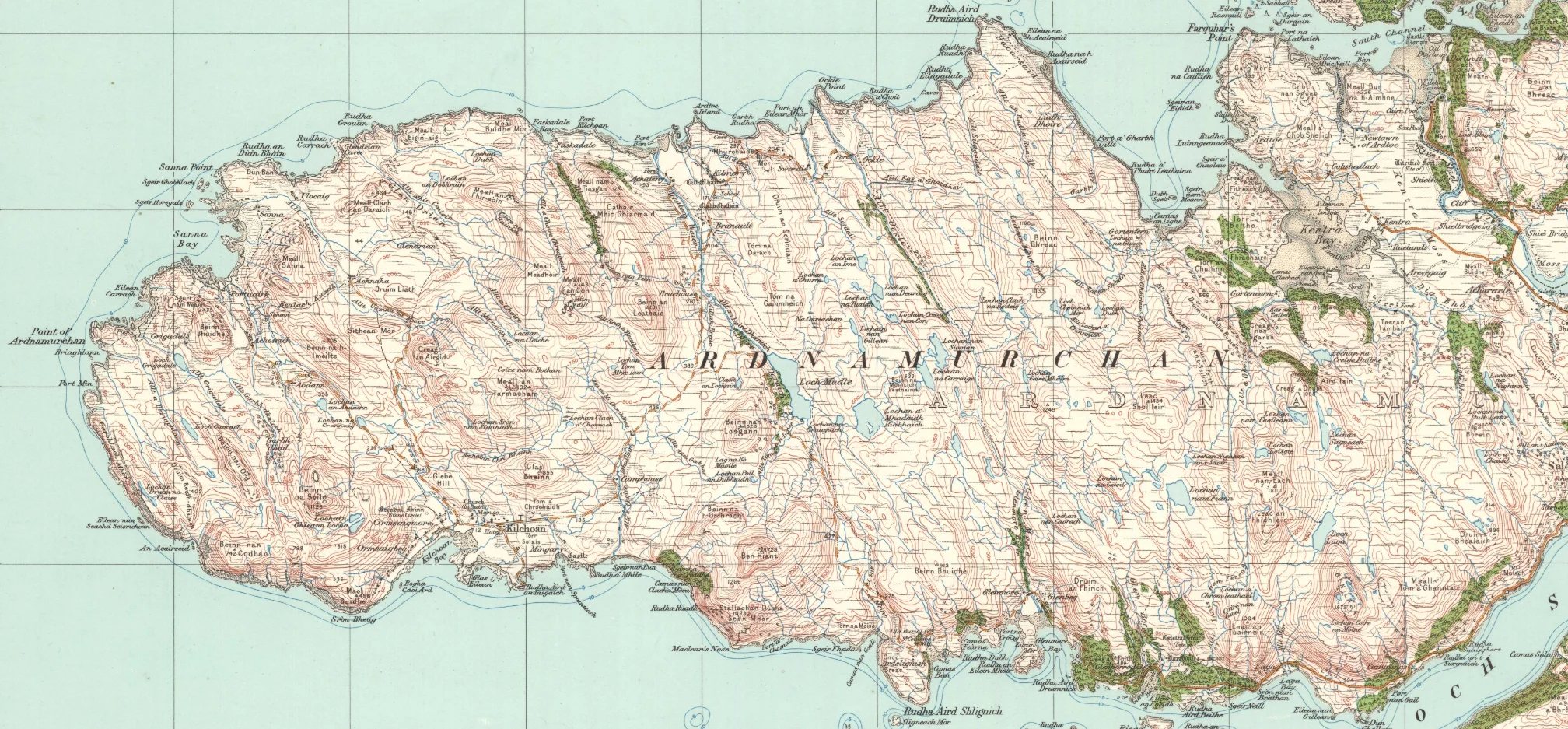
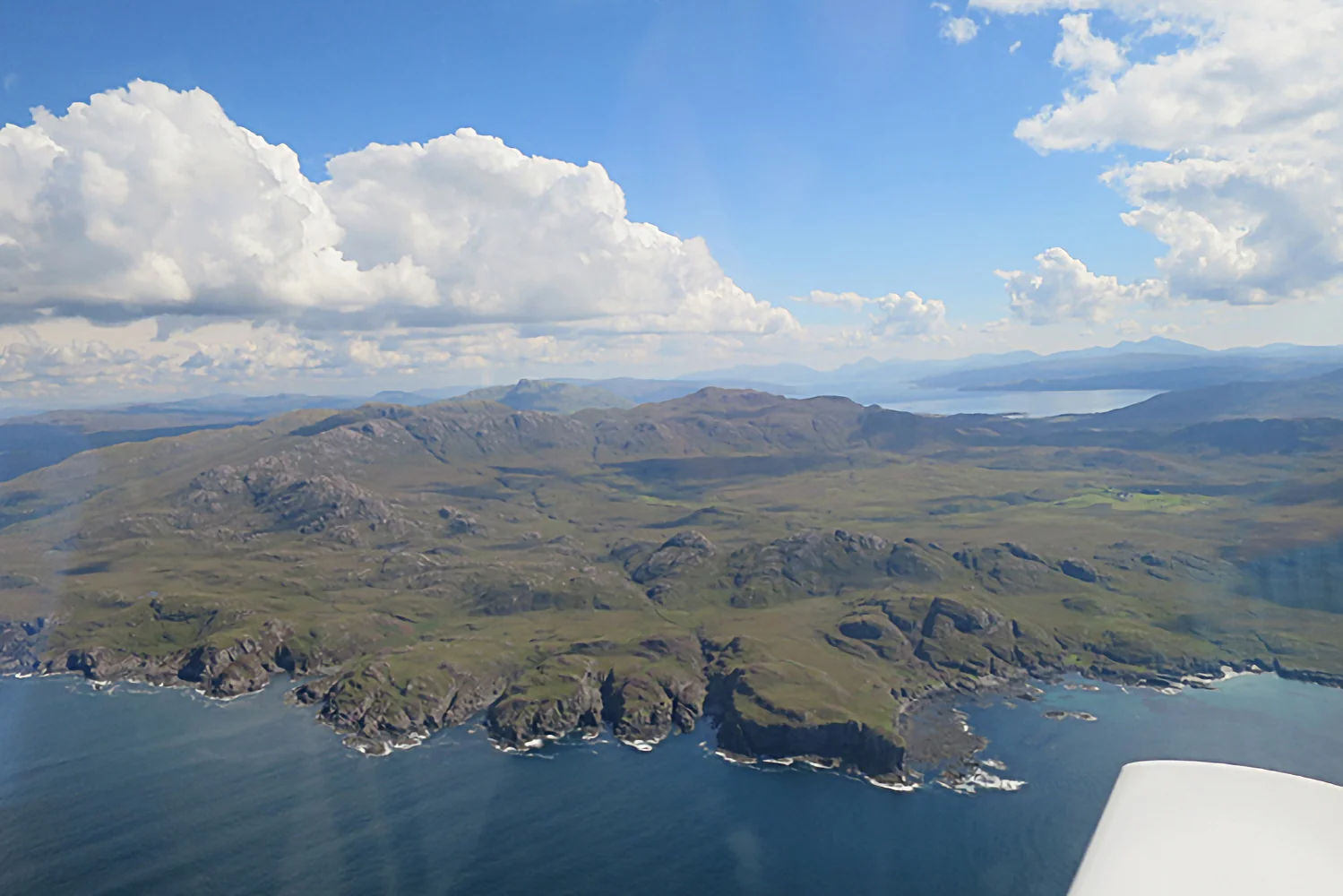
Ardnamurchan in Argyll is the westernmost point on the British mainland. The name likely means the headland of ‘the sea hounds’ or ‘the great seas’ in Gaelic.
Its strategic geography means that the peninsula has been occupied since prehistoric times. It also attracted early Christian saints, and it is said the great Saint Columba visited Ardnamurchan in the sixth century. For hundreds of years Ardnamurchan was held by Norse Vikings who controlled the western seaboard of Scotland. In the twelfth century, Somerled, Lord of the Isles, took control of the area. His descendants and others contested Ardnamurchan over the following centuries.
By the 1290s, Alexander MacDougall, Lord of Argyll and Lorne, had acquired a great territory across the west of Scotland, including Ardnamurchan. MacDougall’s support for John Balliol led to his downfall in the Wars of Independence, when his cousin Angus Og MacDonald, Lord of Islay, a supporter of Robert the Bruce, received many of his lands. This included Ardnamurchan, which he granted to his brother, Iain Sprangach ‘the Bold’. The MacIains continued to hold Ardnamurchan though they were at times deprived of it through clan warfare and rebellion against the Crown. The clan fought at the Battle of Harlaw in 1411 and Inverlochy in 1431.
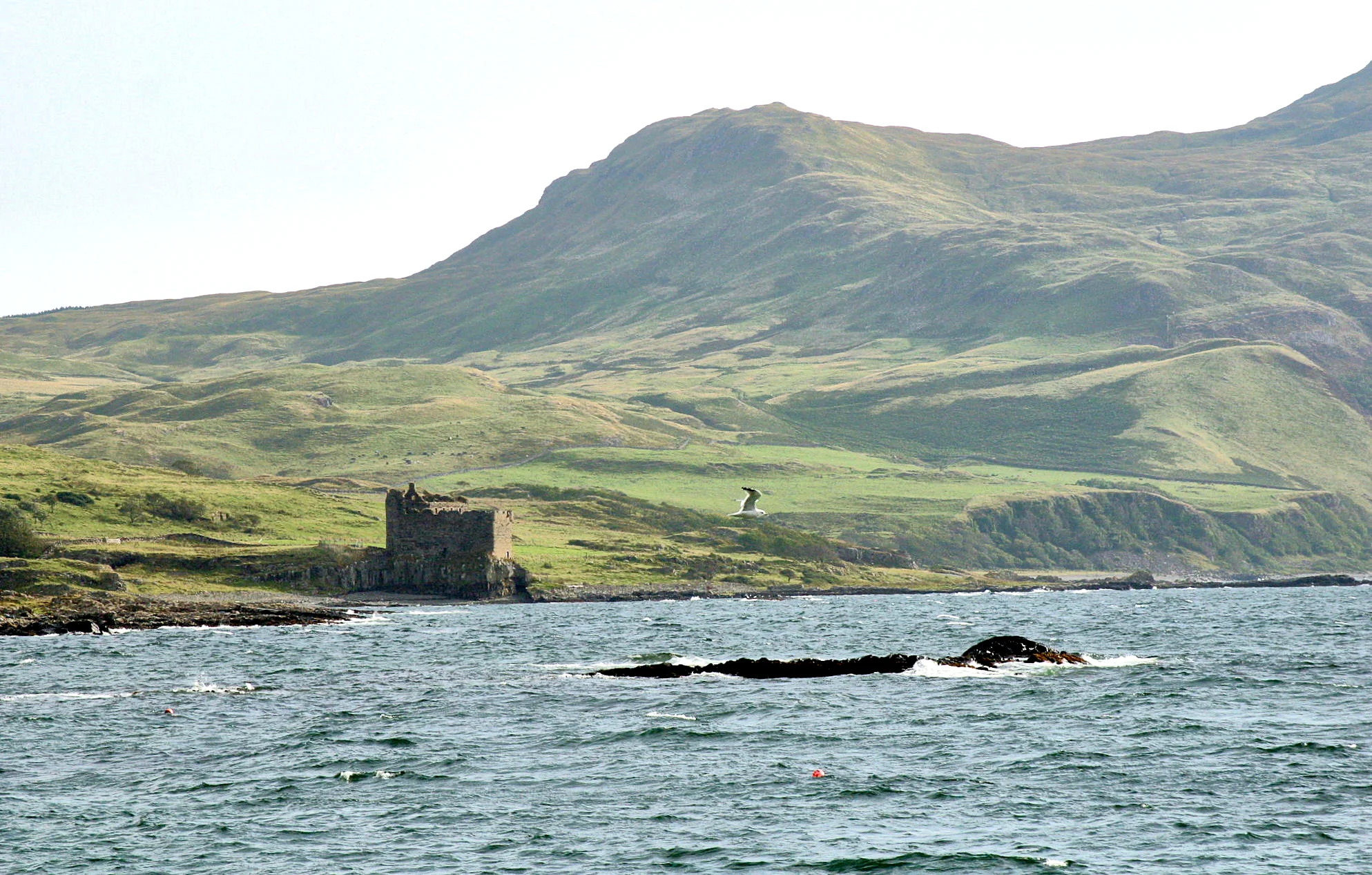
Mingary Castle in Ardnamurchan dates from at least the fourteenth century and likely replaces an earlier Norse stronghold. It first appears in the historical record in the 1490s when King James IV stayed there during his efforts to build a new order in the Isles. The MacIains supported the Crown’s military actions and were rewarded with lands including confirmation of Ardnamurchan and Mingary Castle. Over the following years, John MacIain was a firm supporter of his kinsmen, the Campbell Earls of Argyll, who the king had tasked with governing the Isles. However, when MacIain was killed in 1519, Argyll set out to control of Ardnamurchan himself.
Though the lands and castle were still held by the MacIains, who continued to operate largely independently, they now did so with the Earls of Argyll as their lords. Increasingly, Argyll sought to take full control of Ardnamurchan through legal and military means. Finally, in 1625, following a rebellion and dispersion of the MacIains, the Earls of Argyll were formally confirmed in their possession of the Barony of Ardnamurchan.
The Earls of Argyll were among the most powerful men in Scotland during the seventeenth century. Archibald, 8th Earl and 1st Marquess and his son Archibald, later the 9th Earl, both opposed King Charles I in the Wars of the Three Kingdoms, 1638-1652. During the wars Alasdair MacColla MacDonald landed an Irish army at Ardnamurchan which he joined with Royalist forces under the Marquess of Montrose. Argyll rebelled against King James VII in 1685 but was captured and executed ,with his lands forfeited to the Crown. His son Archibald, 10th Earl of Argyll, accompanied William of Orange’s invasion of 1688 and was restored to the family lands and titles. He was elevated to Duke of Argyll in 1701. His descendants remain prominent nobles to this day..
![David Scougall, Archibald Campbell [MacCailein Mòr Gilleasbaig Fiar-shùileach], 1st Marquess of Argyll, 1598 - 1661. Statesman|National Galleries of Scotland (CC BY-NC)](https://scottish-baronage.website-setup.com/wp-content/uploads/2025/11/ardnamurchan-fig.5-marquess.webp)