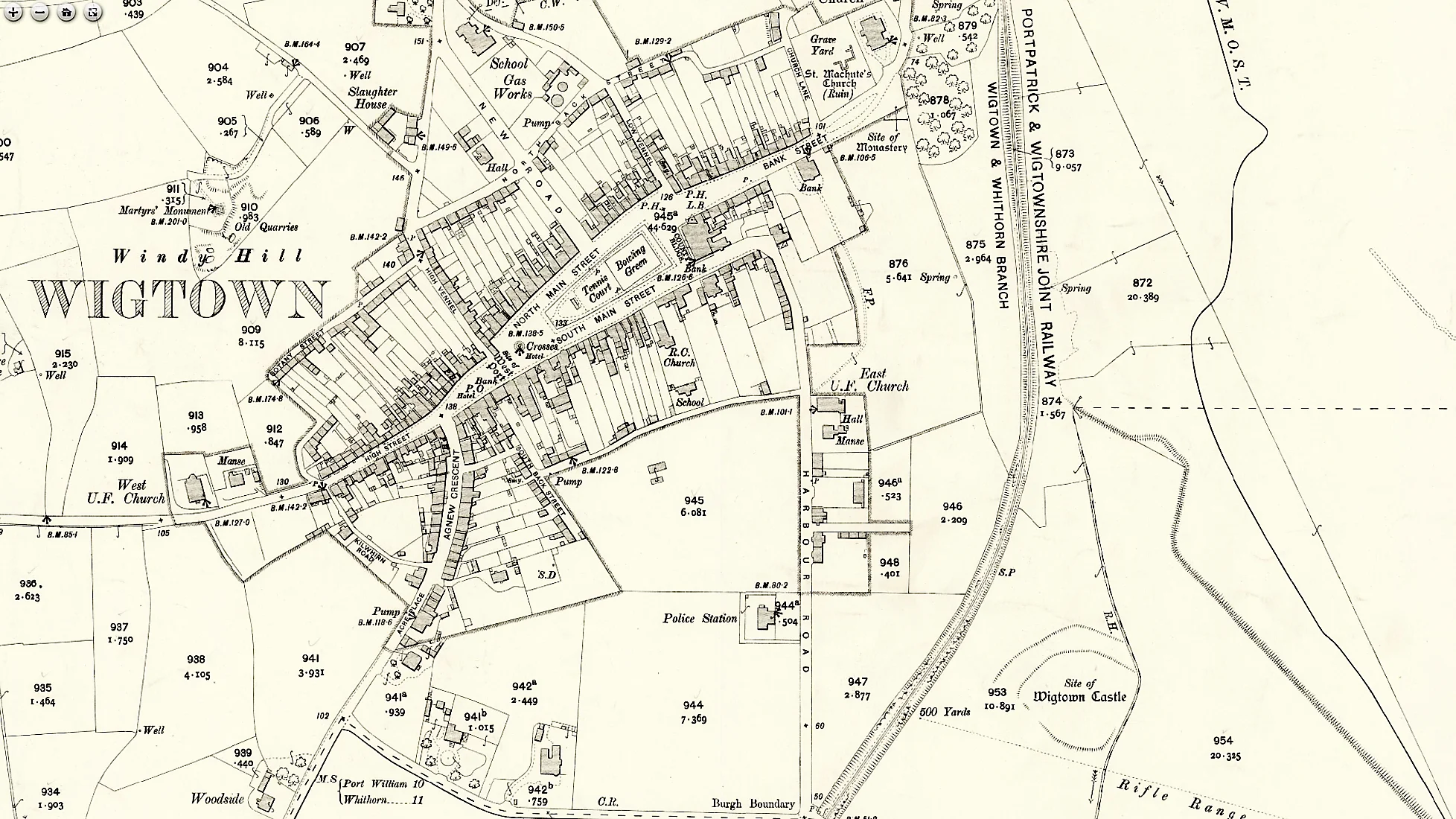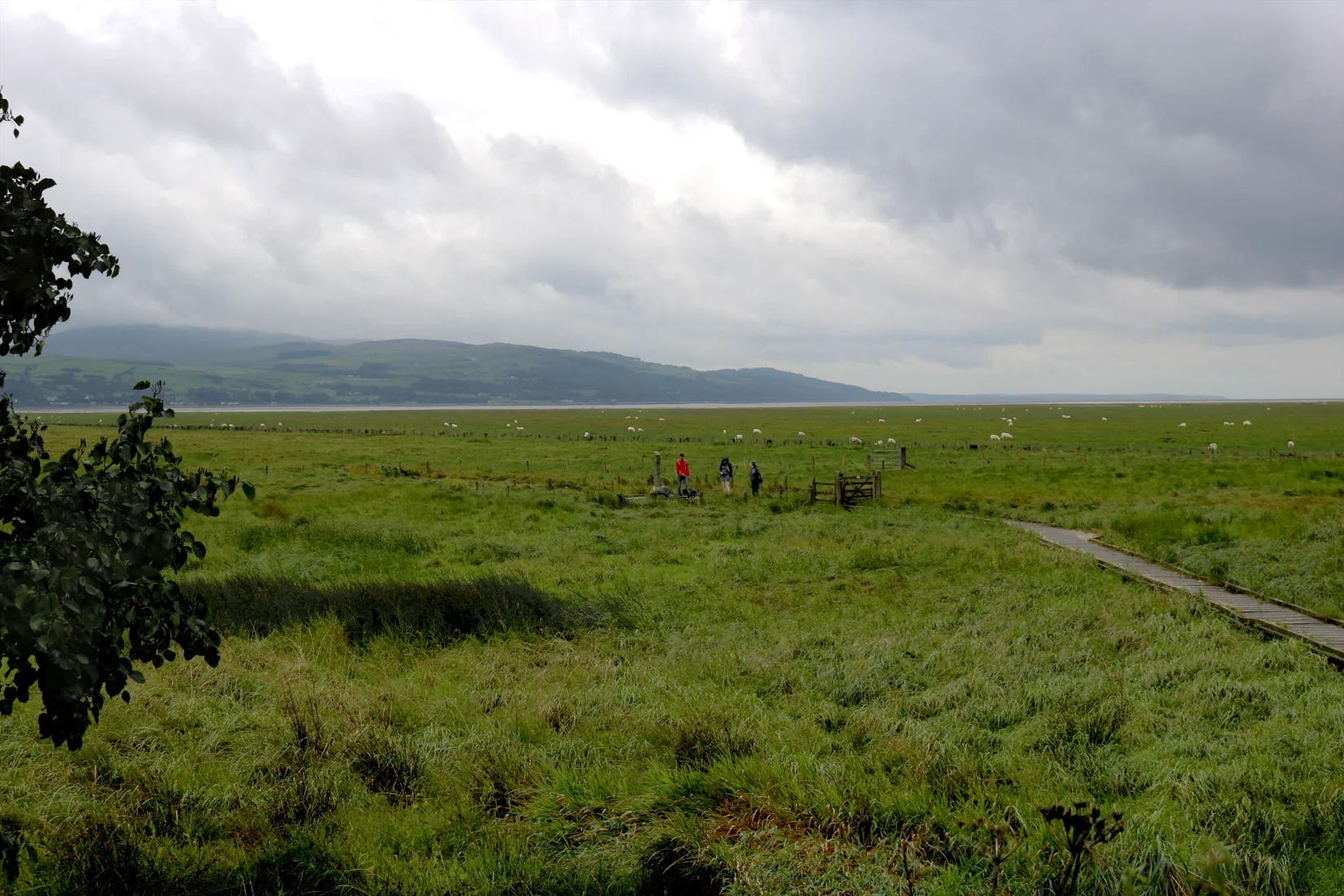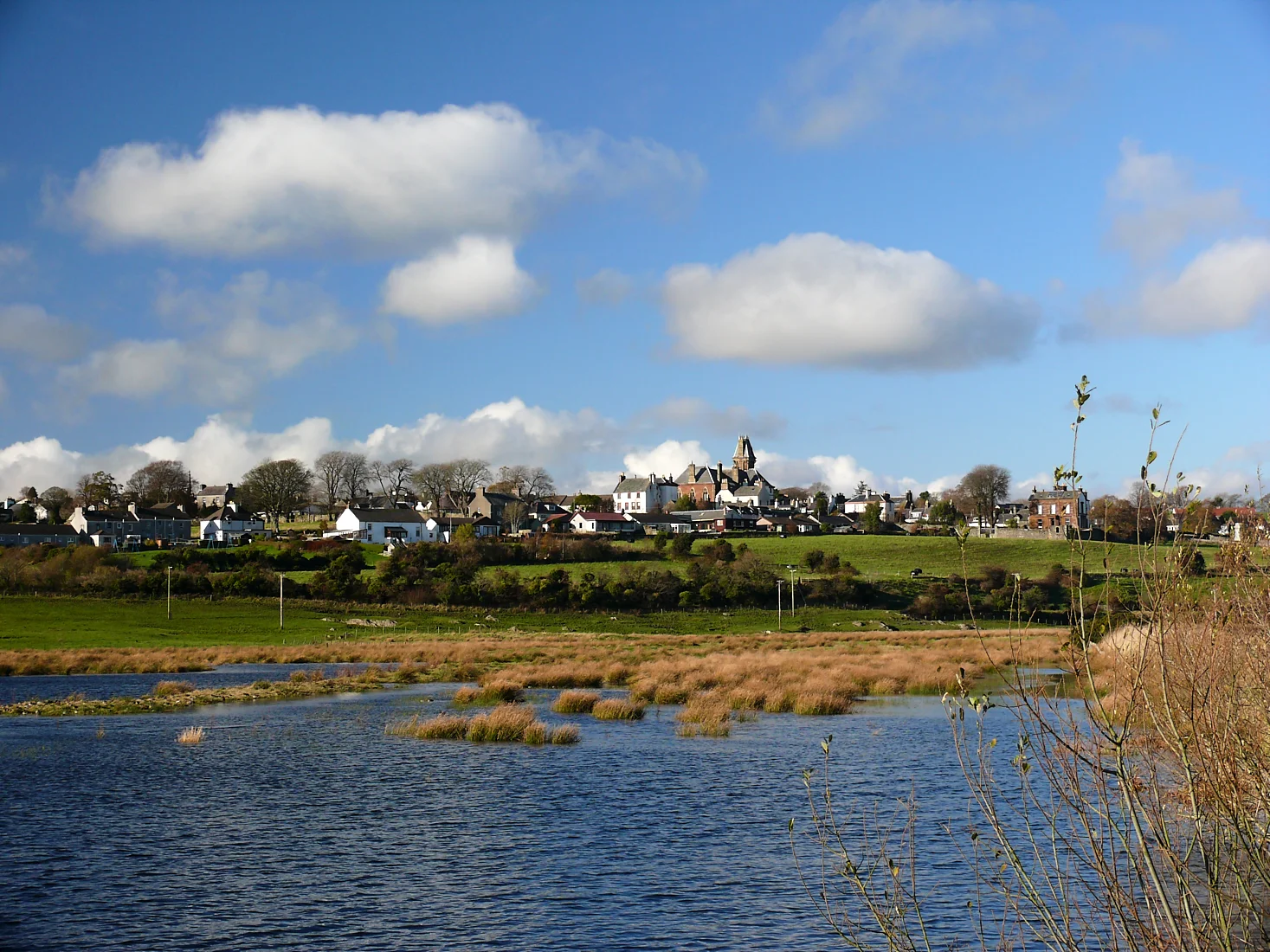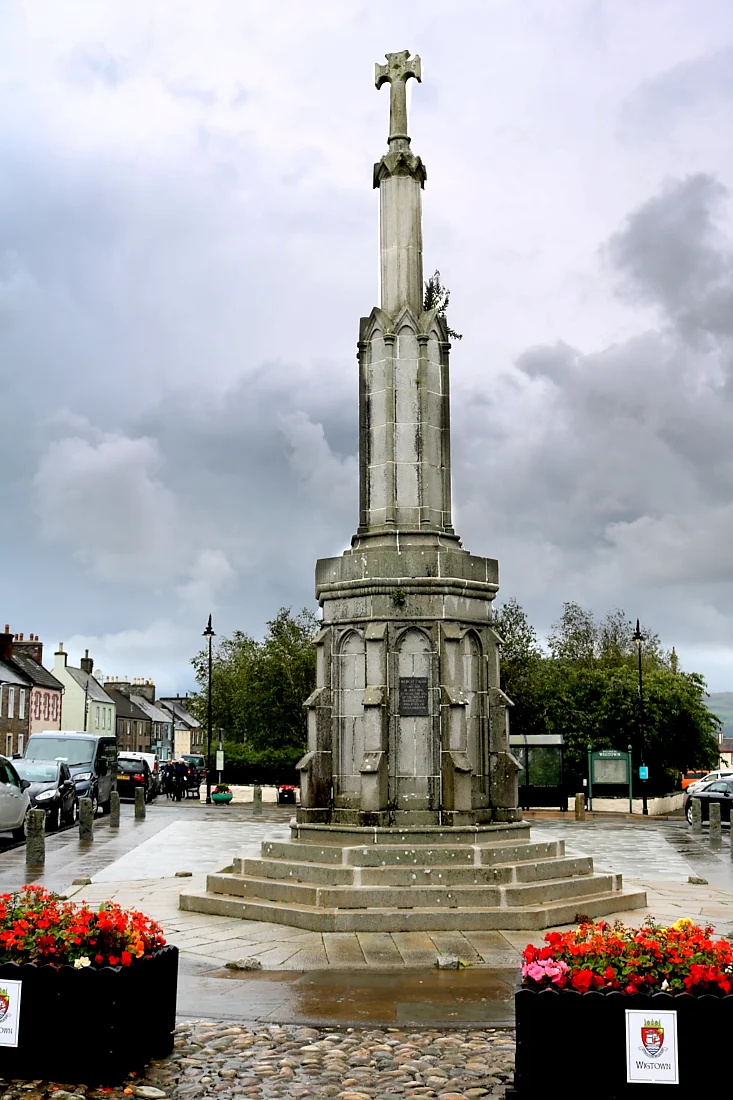
Wigtoun (also known as Wigton or Wigtown) is a town on the western shore of Wigtoun Bay, traditionally a trading port. Its name comes from wic meaning either a village or a bay and ton meaning either a town or a hill.
The hill on which Wigtoun rests is some 200 feet above sea level and commands a view of the surrounding area for some miles. It may have originally been founded by Saxon invaders. The area has been in human occupation since prehistory as evidenced by the Standing Stones of Torhousekie, a large stone circle. There has been a Christian church there since at least the sixth century.
Wigtoun is said to have been a royal burgh from the reign of King David II. The town is perhaps most famous for the Wigtoun Martyrs, the execution by drowning of two women for nonconformity to the Church in the seventeenth century.
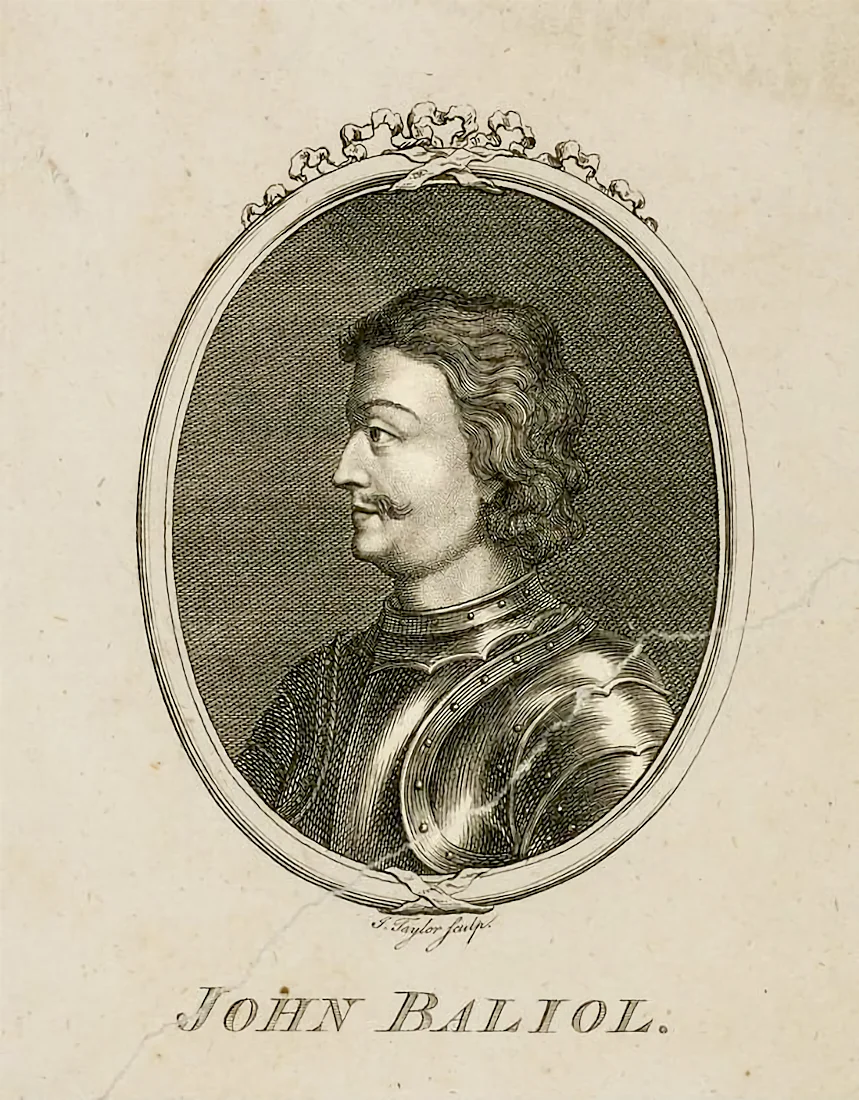
A castle once stood between the town and the harbour. Certainly it existed by the time of the Wars of Independence, as we know it was held for King Edward I of England, and Sir William Wallace is said to have captured it in 1297. For a time, the castle was held by John Balliol, King of Scotland, and served as a royal residence. In the fourteenth century, Malcolm Fleming was made Earl of Wigtoun, though his son Thomas sold the earldom to the powerful Douglas family. The Douglases, in turn, fell afoul of the Crown, and their estates and titles were forfeit.
John Fleming was raised to the peerage as Earl of Wigtoun in 1606 by King James I. His son John Fleming, 2nd Earl of Wigtoun, was a Privy Councillor, a Commissioner of the Estates and a firm Royalist in support of King Charles I during the civil wars of the mid-seventeenth century. His son John, who later became 3rd Earl of Wigtoun, was also a Royalist and fought at the Battle of Philiphaugh in 1645. William Fleming, 5th Earl of Wigtoun, was educated at Glasgow University and had a military career before inheriting his brother’s lands and titles. He rose to be Commander of Dumbarton Castle, Sheriff of Dumbarton, and a Privy Councillor. John Fleming, 6th Earl of Wigtoun, continued his family’s ancestral support of the House of Stuart and accompanied King James VII when he fled to France in 1689. On Wigtoun’s return to Scotland he was an opponent of the Treaty of Union. At the outbreak of the Jacobite Rising of 1715, he was imprisoned in Edinburgh Castle as a suspected Jacobite sympathiser.
On the ending of the Wigtoun male line, the estates passed through Clementina, daughter of the 6th Earl, who had married Charles, 10th Lord Elphinstone. The estates were held by Lady Clementina’s descendants. The family continued to hold these estates down to the assignation of the feudal Earldom of Wigtoun to John William Burns of Kilmahew in 1876. In 2023, the feudal Earldom is held by Dr. Roland Zettel.