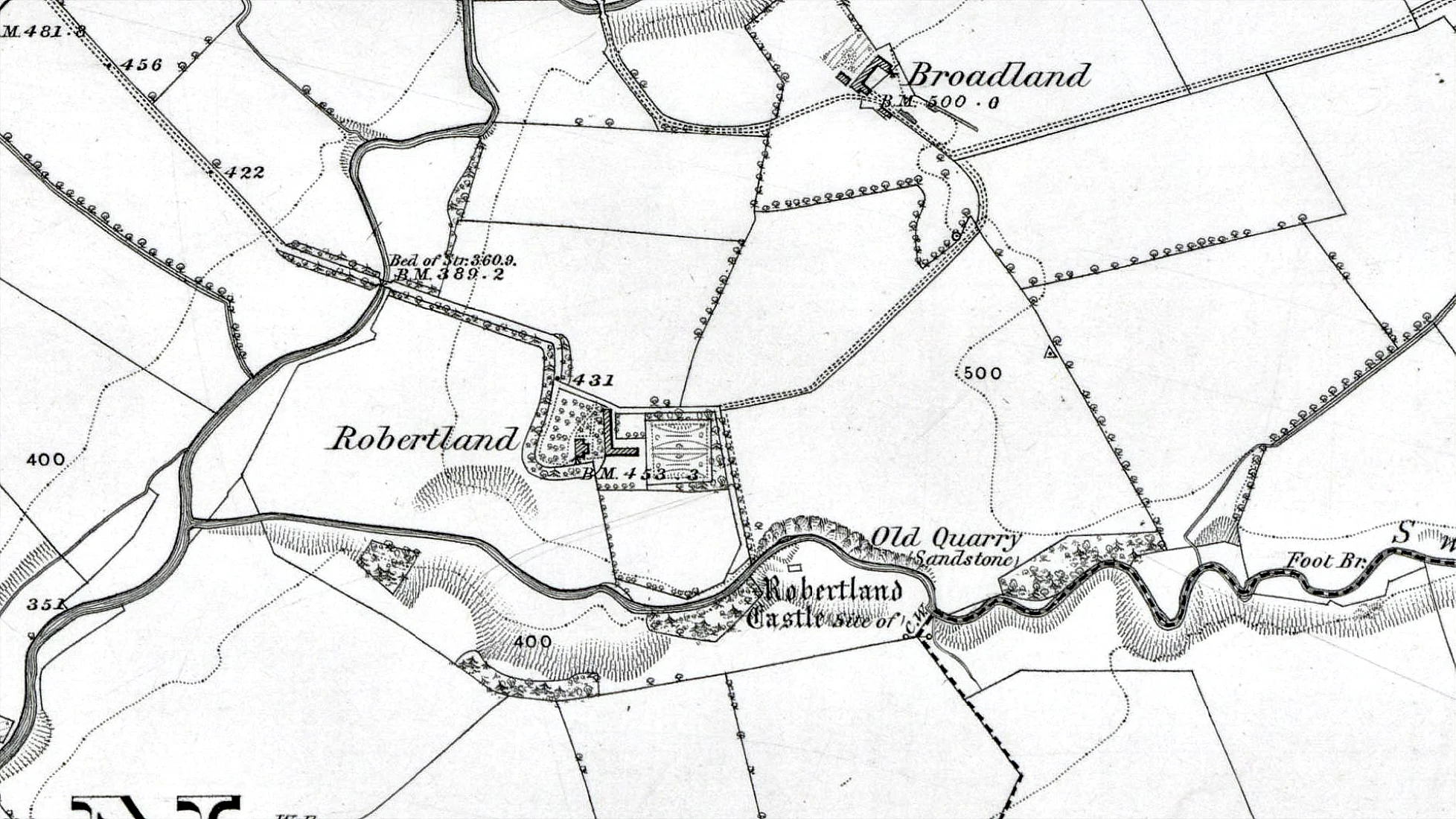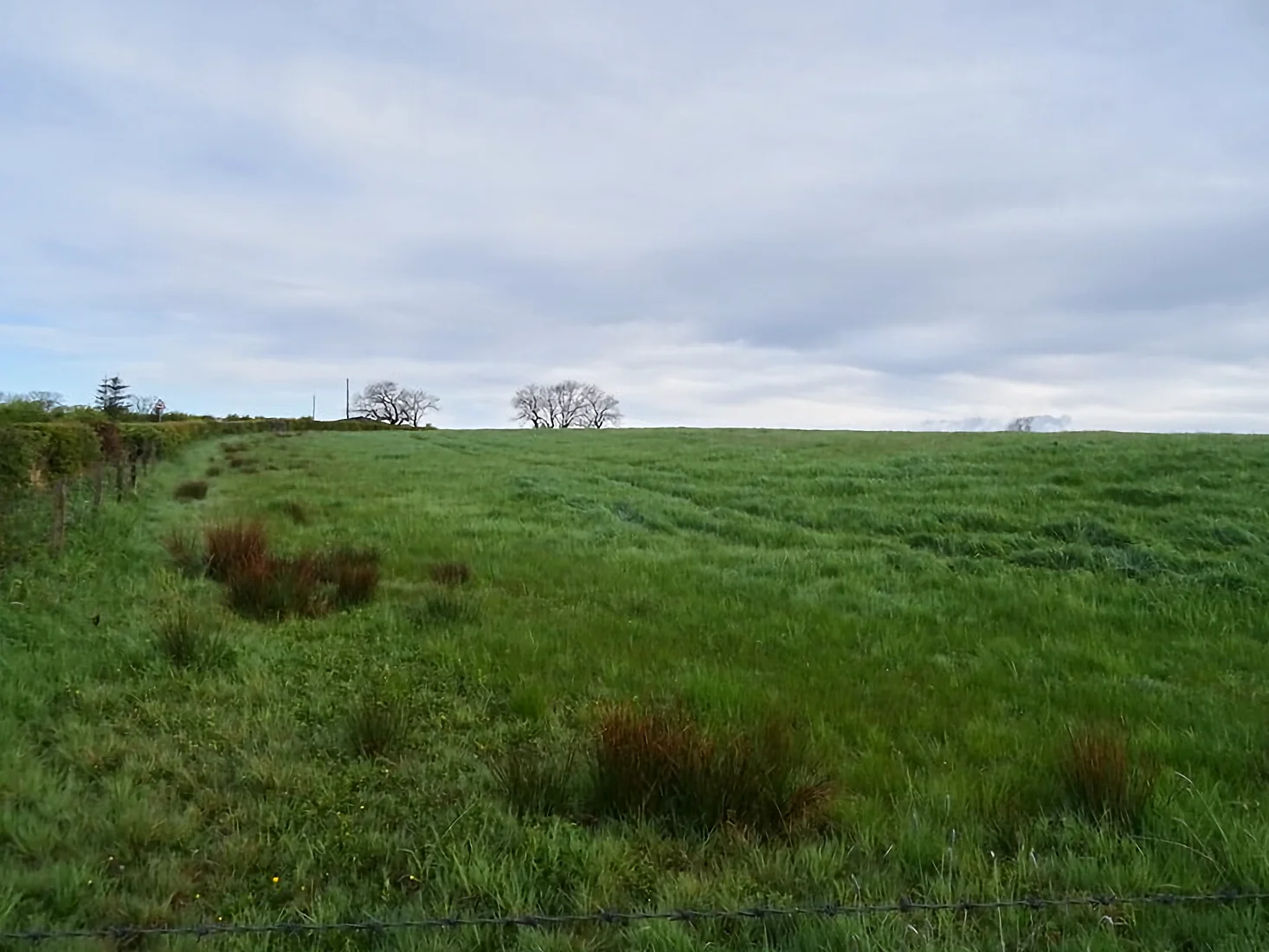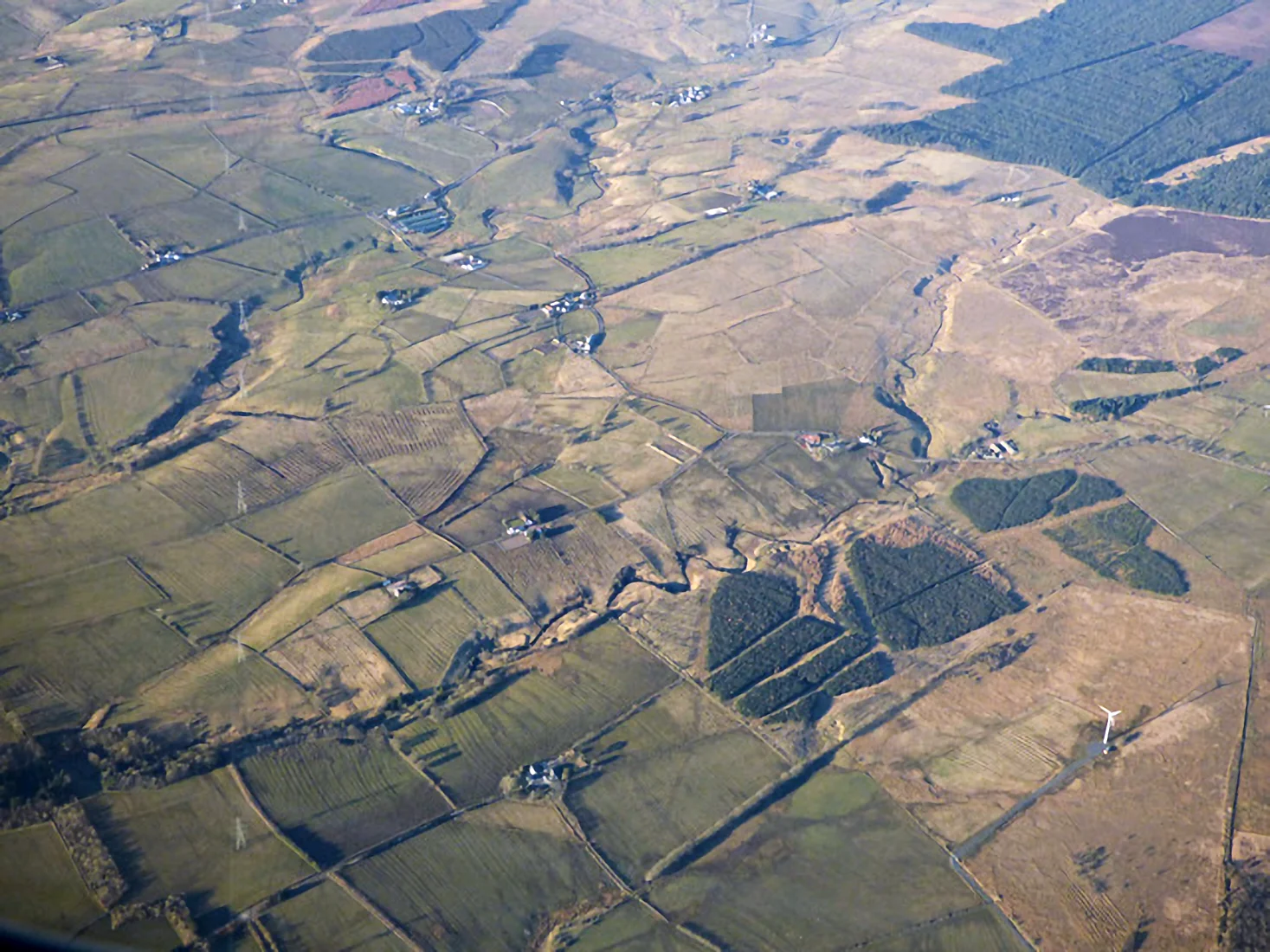
Robertland lies to the northeast of Stewarton in the district formerly known as Cunninghame, now part of East Ayrshire. It likely takes its name from a Robert who held the lands in ancient times.
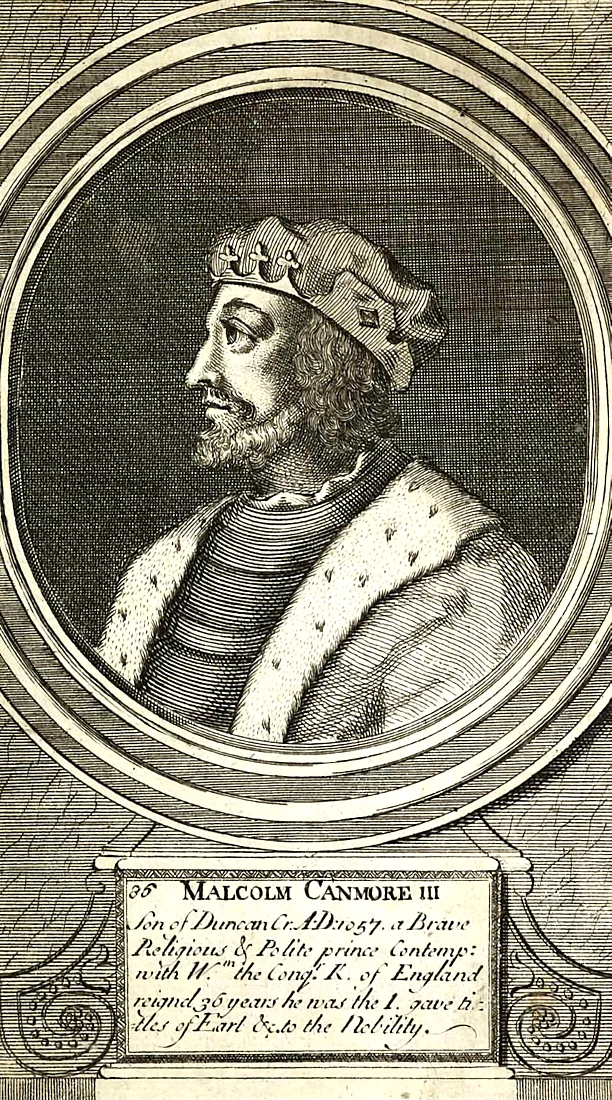
For centuries Robertland was part of the Corsehill estate, which it is said was granted to the Cunninghame family by Malcolm Canmore in the eleventh century. Legend has it that Prince Malcolm had escaped from the captivity of the usurper King Macbeth and hidden in a barn where a member of the Cunninghame family forked hay over him. In return for this act, when Malcolm became king the lands of Corsehill were granted to the family. They subsequently adopted the shake-fork on their Arms and the motto ‘Over-Fork-Over’. The family retained the lands throughout the following centuries, and in 1539 the Barony of Robertland was erected by King James V for David Cunninghame in return for his good service.
There once stood beside the Swinzie Burn at Robertland a huge castle belonging to the Cunninghames. However, in the sixteenth century there was a dispute between the Cunninghame and Montgomerie families which led to the murder of Hugh, 4th Earl of Eglinton by David Cunninghame of Robertland. It is believed that Robertland castle was burnt down as revenge for the murder of the Earl, although some say the fire was set first and the earl was killed in retaliation. Robert, master of Eglinton, took possession of Robertland while Cunninghame fled to Scandinavia. The Cunninghames were not long dispossessed, however. Upon the marriage of King James VI to Princess Anne of Denmark, she secured from her husband a pardon for Cunninghame who in time regained royal favour. He went on to work for the Crown as an architect, first as Master of Works in Scotland and then Surveyor of the Works in England. The family retained the support of the monarchy over the following centuries. Sir David Cunninghame was created a Baronet of Nova Scotia in 1630, while his son was later appointed a Commissioner of Supply. The Cunninghame family continued to hold Robertland into the eighteenth century.
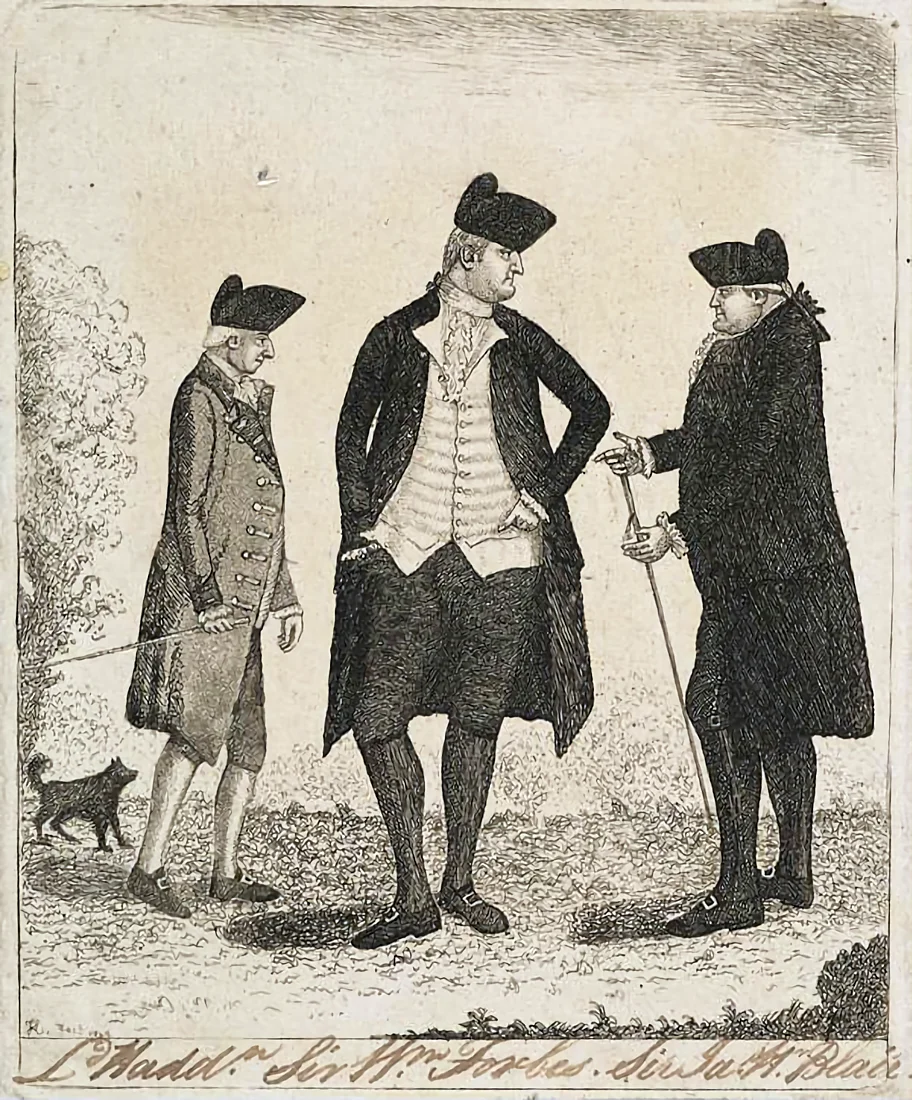
Robertland was sold to Sir James Hunter Blair, Baronet, in 1772. Sir James had begun his career as a banker, later becoming an MP and Lord Provost of Edinburgh.
He was a friend of Robert Burns, who wrote after his death an Elegy on the death of Sir James Hunter Blair. Burns is also said to have visited Robertland, and it is thought that the poet’s uncle was for a time steward of the estate. Robertland was later sold to Alexander Kerr, a Glasgow merchant and one of the very wealthy Tobacco Lords who made their fortune in the Americas. The Robertland estate was inherited by Kerr’s son John James Kerr and has passed through several hands since. The mansion house of Robertland, built in the nineteenth century, is known for being set alight and badly damaged by suffragettes in 1914.