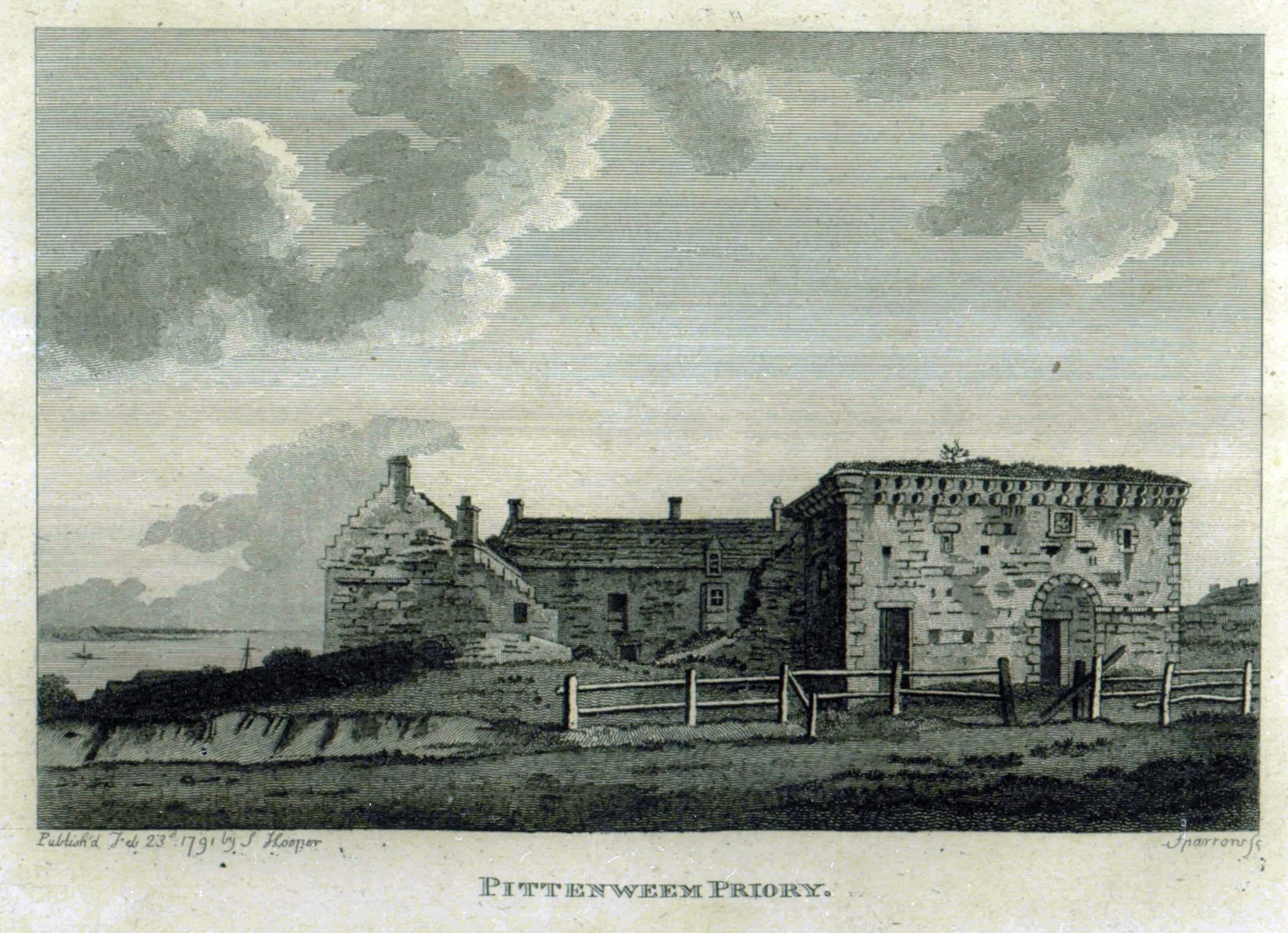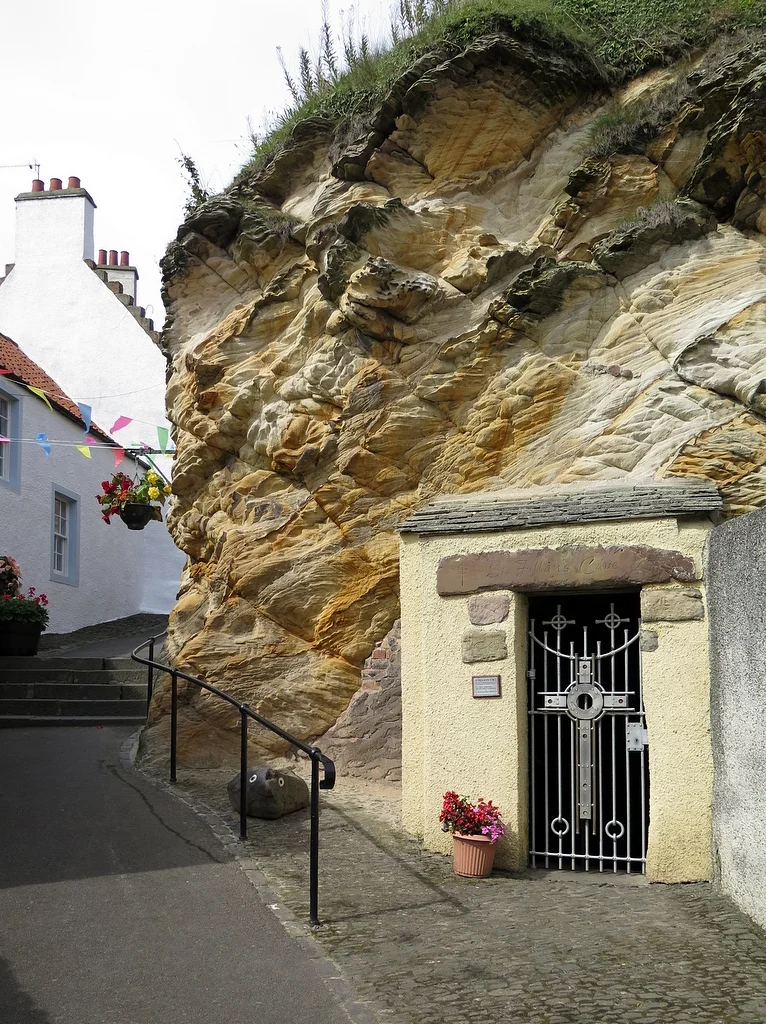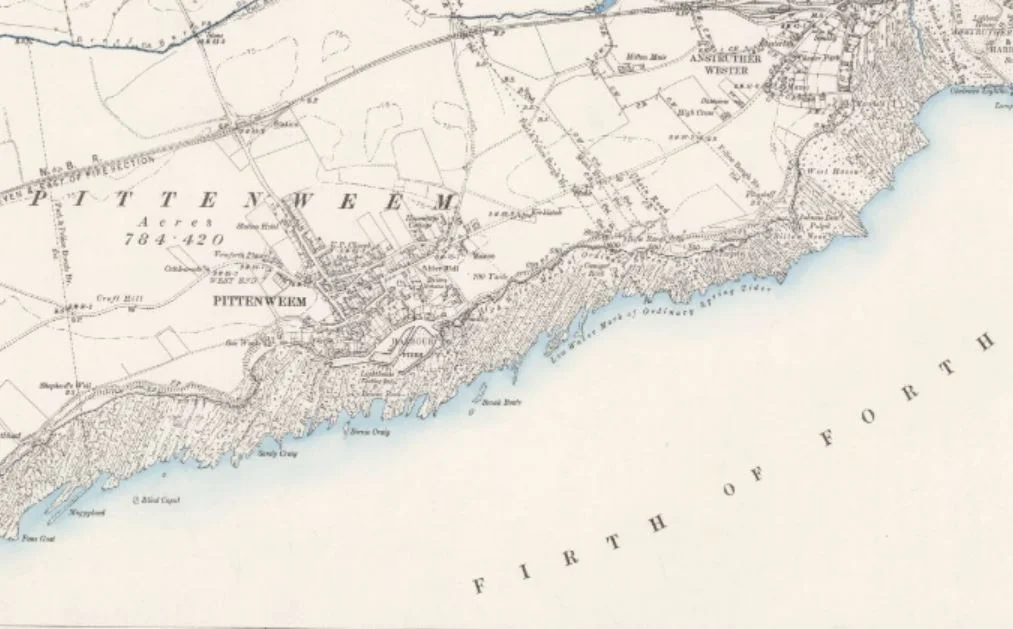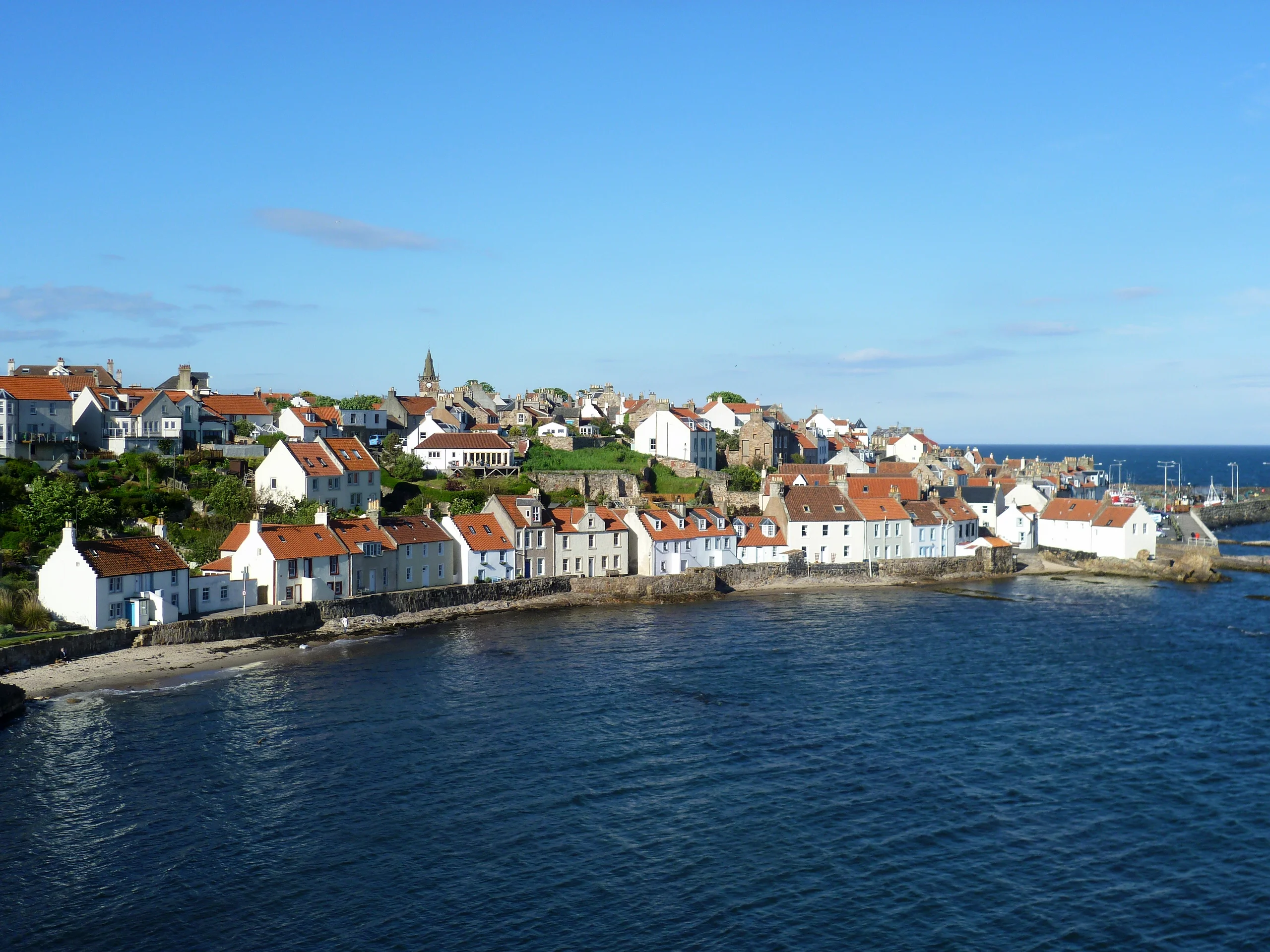
Pittenweem is a fishing village in the East Neuk of Fife. Its name is a combination of Pictish and Gaelic Pit na h-Uaimh meaning ‘place of the caves’. The name very likely derives from St Fillan’s Cave which the saint supposedly used as a chapel in the eighth century and from which he is said to have converted the local population to Christianity.
The priory on the Isle of May was granted lands at Pittenweem in the twelfth century by the pious King David I. The Isle of May Priory was itself under control of the Benedictine Abbey of Reading in England. It seems that sometime around 1300 the priory came under the jurisdiction of the Augustinians of St Andrews Priory, who transferred the monks from the Isle of May to Pittenweem, where they took up residence in a building above St Fillan’s Cave.
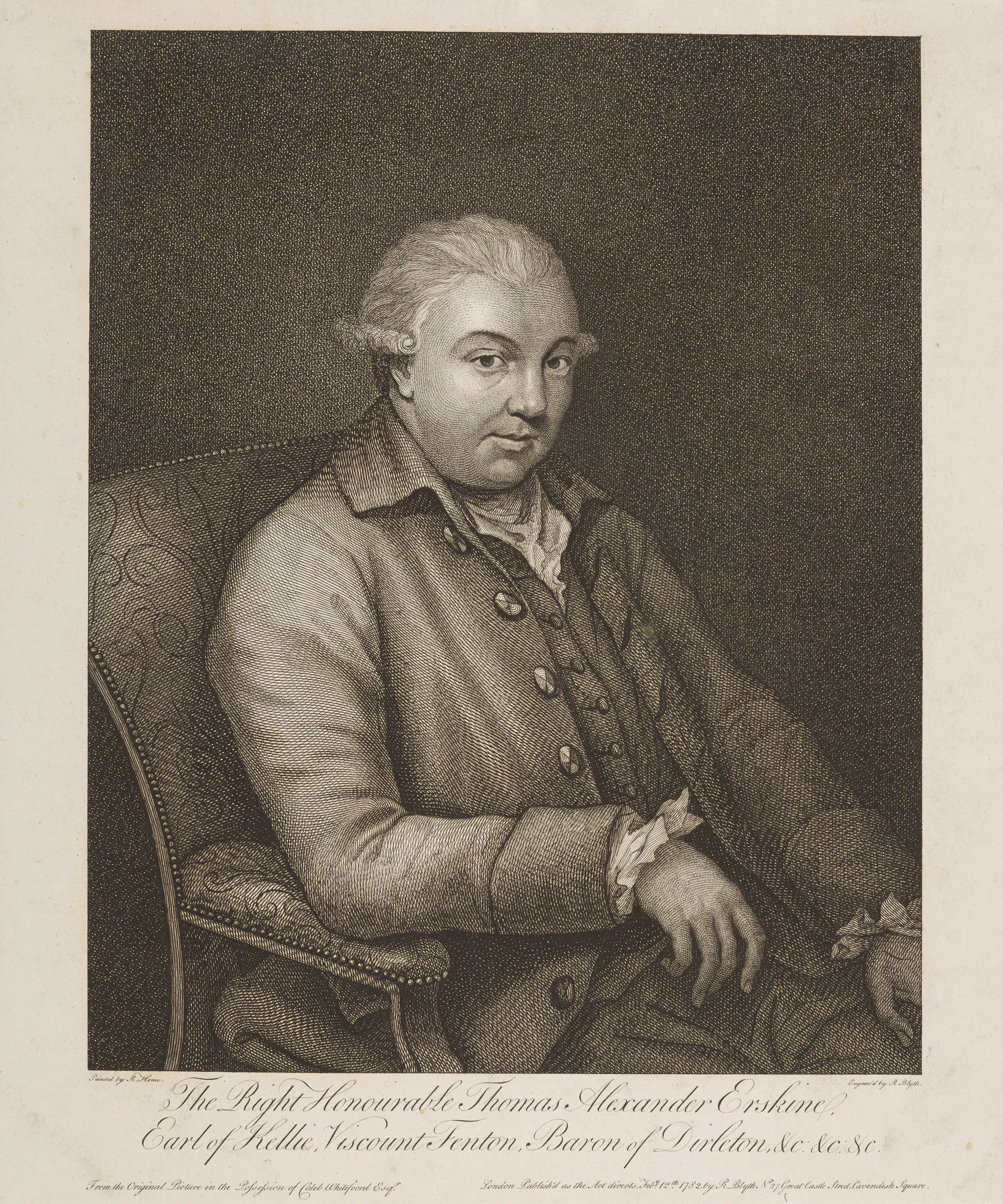
Pittenweem was first erected into a barony by King James V in 1526 for Sir John Roule, Prior of Pittenweem. At the Reformation in 1560, the priory was secularised and held by a succession of laymen known as Commendators. The last Commendator, Sir William Stewart, was in good favour with King James VI, and in 1606 the king granted the lands of Pittenweem to Stewart’s son Frederick. These were erected by the king into the new Lordship and Barony of Pittenweem. Soon after, however, Fredrick Stewart assigned the title and lands of the Lordship and Barony to Thomas Erskine, Viscount Fenton, later 1st Earl of Kellie, a lifelong friend of King James VI and one of his Privy Counsellors.
Alexander, 3rd Earl of Erskine was a firm Royalist during the civil wars of the seventeenth century. He fought for King Charles II at the Battle of Worcester, after which he was taken prisoner before being exiled. The Earls of Kellie continued to be staunch supporters of the House of Stuart, and Alexander, 5th Earl of Kellie was a Jacobite who fought at the Battle of Culloden in 1746 and is said to have hidden in the stump of a tree following the battle. His son, Thomas, 6th Earl of Kellie was a famous musician and composer who sold most of the Kellie estates, including the Lordship and Barony of Pittenweem, to Sir John Anstruther of Anstruther and Elie in 1769.
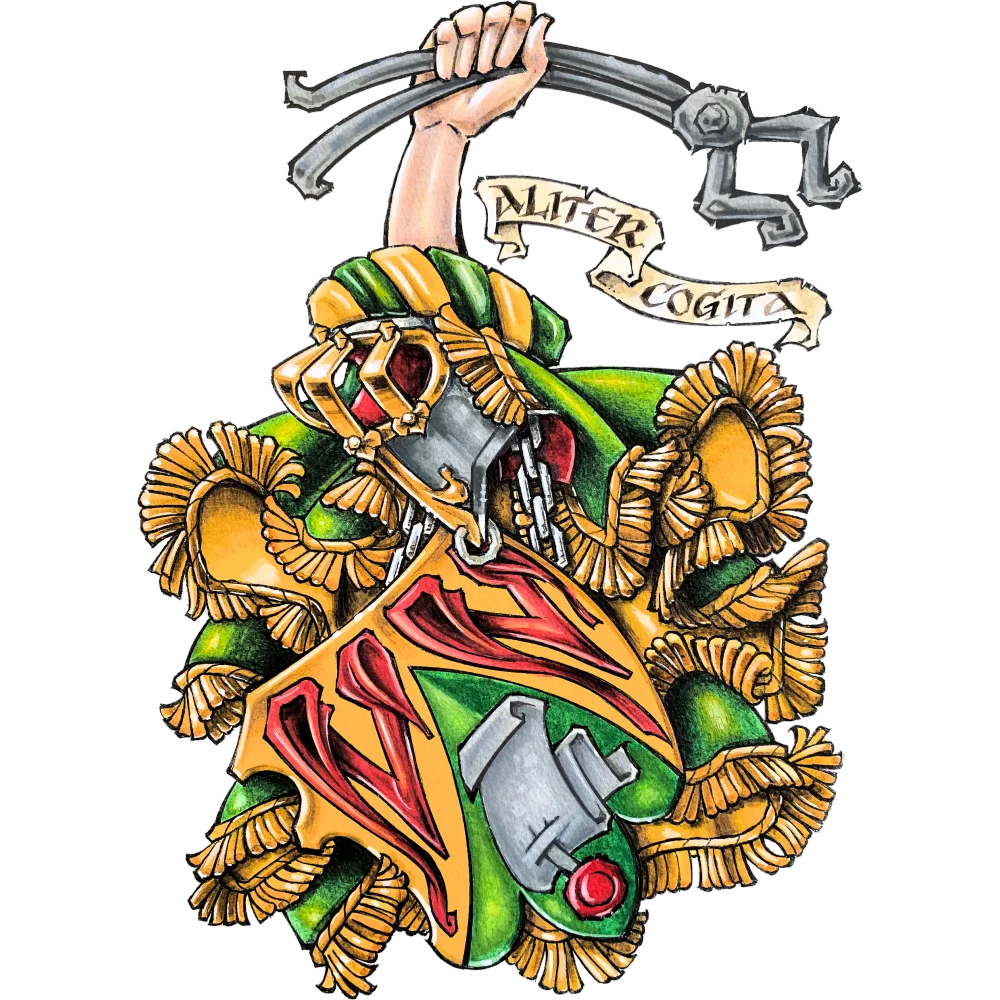
Sir John was an agricultural improver and MP and a supporter of the administration of Lord North. His descendant Sir Windham Carmichael-Anstruther, Baronet sold his Anstruther estates together with the Lordship and Barony of Pittenweem, priory and adjacent land to William Baird in the 1850s. Baird was an industrialist and, working with his brothers, became rich through coal, eventually coming to be a millionaire and MP. His son William Baird of Elie, who succeeded him in his estates, was an officer in the British Army and a JP. The lordship and barony remained with the Baird family until 1978, when Lavinia Enid Muriel Baird conveyed the Lordship and Barony of Pittenweem to the prominent Scottish lawyer William Ronald Crawford Miller. Today the Lordship and Barony of Pittenweem is held by the Zangenberg family.